


A rhinoplasty is supposed to give you a nose you feel good about. But for some people, the nose slowly changes in the months or years after surgery: it gets shorter, the tip tilts up, the nostrils show from the front, and the skin feels tight and hard. This is called a contracted nose, and it is one of the most challenging problems a revision surgeon can face.
In 30 seconds
- A contracted nose is caused by scar tissue tightening after surgery.
- Watch for a shorter, upturned nose, visible nostrils or a hard, tight tip.
- It usually gets worse over time if the cause is not treated.
- Rib cartilage gives the strength to rebuild it and hold the new length.
This guide explains what causes a contracted nose, the warning signs to look out for, and how Dr. Nguyen Tien Huy rebuilds it with rib cartilage at Saigon Venus.
What Is a Contracted Nose?
A contracted nose happens when scar tissue inside the nose tightens and shrinks after surgery. As the scar contracts, it pulls the skin and the soft tissue upward and inward. The nose loses length, the tip loses support, and in severe cases the columella, the strip of tissue between the nostrils, retracts or almost disappears.
Unlike a small asymmetry or a slightly crooked bridge, a contracted nose usually gets worse over time if the cause is not treated.
“A contracted nose is a scar problem first, and a shape problem second.”
What Causes a Contracted Nose?
A contracted nose rarely has one single cause. The most common factors are:
- Infection or chronic inflammation around an implant, which triggers heavy scarring
- Capsular contracture, when the body forms a thick, tight capsule around a silicone implant
- Multiple previous surgeries, each one adding a new layer of scar tissue
- Too much cartilage removed in an earlier operation, leaving the nose without support
- An implant that was too large or too tight for the skin, putting constant pressure on the tissue
Warning Signs You Should Not Ignore
See a revision specialist if you notice any of these changes after a nose surgery:
- Your nose looks shorter or more upturned than it did right after surgery
- Your nostrils are clearly visible from the front
- The tip feels hard, tight or “stuck”
- The columella has pulled back, or there is a notch between the nostrils
- The implant shows through the skin, or the skin looks red, thin or shiny
- You have repeated swelling, discharge or an unusual smell from the nose
- Breathing through your nose has become harder
Some of these signs, especially redness, discharge or a visible implant, can point to an active infection and should be checked as soon as possible. You can read more in our guide to the signs of nose complications.
Why Rib Cartilage Is Used to Rebuild a Contracted Nose
To correct a contracted nose, the surgeon has to bring the nose back down to a natural length and then hold it there against the pull of the scar tissue. That takes a strong, stable framework.
- Strength: rib cartilage is firm enough to resist scar contracture and keep the nose from shrinking back.
- Quantity: after several surgeries there is often little or no septal or ear cartilage left. The rib provides enough material to rebuild the whole structure.
- Your own tissue: because the cartilage comes from your body, the risk of rejection is low compared with synthetic implants.
This is why rib cartilage is the main material Dr. Huy uses in complex rib cartilage rhinoplasty and nose reconstruction.
“The sooner it is assessed, the more options you usually have.”
How the Surgery Works
Every contracted nose is different, but a reconstruction at Saigon Venus generally follows these steps:
- Assessment and planning: Dr. Huy examines the nose, the skin and the scar tissue, and reviews what earlier surgeries left behind before planning the new shape.
- Removing the problem: any old implant or damaged material is removed.
- Releasing the scar tissue: the tight scar is carefully released so the skin and lining can move again.
- Harvesting rib cartilage: a small piece of cartilage is taken from the rib, usually through a short incision that can be hidden in the chest crease.
- Building a new framework: the cartilage is carved into grafts that lengthen the nose, support the tip and rebuild the columella.
- Restoring soft tissue: where the skin or lining is thin, extra tissue grafts may be used to cushion the new structure.
Because the scar tissue is often very hard, these operations take much longer than a first-time rhinoplasty. Severe cases can take five to six hours.
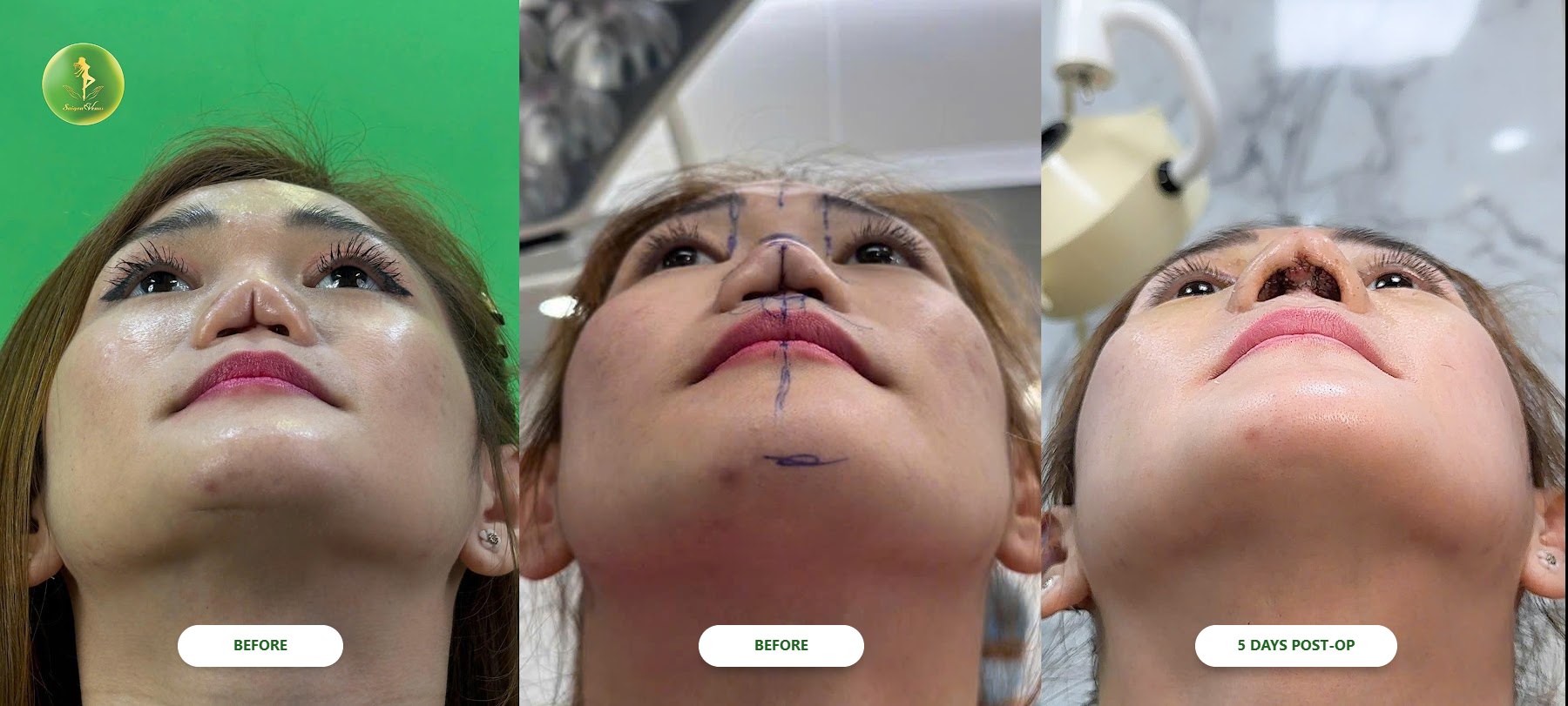
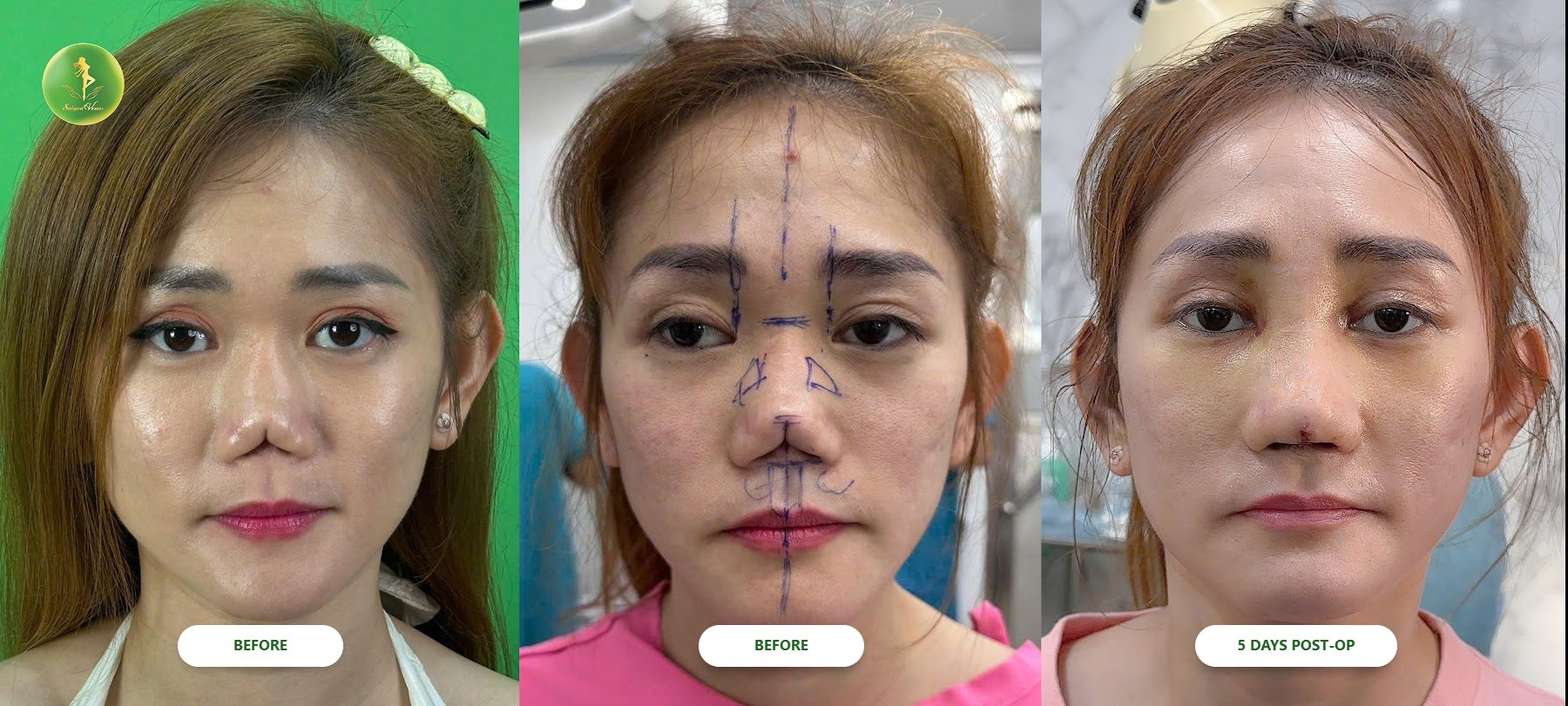
Real Case: Angelina from Indonesia
Angelina had several nose surgeries in Indonesia and Korea. Each one made her nose more contracted, until her columella had almost disappeared. Dr. Huy rebuilt her nose with her own rib cartilage in a six-hour operation. Five days later, her nose was already longer, the tip had support again, and the columella had been rebuilt.
Recovery: What to Expect
- First week: swelling and bruising are at their peak. International patients should plan at least 10 days in Ho Chi Minh City for nose surgery.
- Weeks 2–4: most visible swelling goes down and you can return to normal daily activities.
- Months 3–12: the remaining swelling settles and the final shape gradually appears. Revision noses, with thicker scar tissue, often take longer to settle than first-time rhinoplasty.
Your surgeon will give you specific aftercare instructions. Following them closely, and avoiding pressure or knocks on the nose, plays a big role in the final result.
Watch: Karina’s contracted nose journey
Karina flew from France after several surgeries. Here she is, 21 days after her revision.
Frequently asked questions
Can a contracted nose be fixed with a new silicone implant?
Usually not on its own. Scar tissue that has already contracted around one implant tends to contract again. Rebuilding the structure with your own rib cartilage gives a more stable long-term result.
How long should I wait before revision surgery?
It depends on your case. If there is an active infection, the surgeon may first remove the implant and let the tissue heal before rebuilding. Dr. Huy will advise after assessing your nose.
Will there be a scar on my chest?
Rib cartilage is usually taken through a short incision that can be hidden in the crease under the breast. Dr. Huy will show you where at your consultation.
Can I have an online consultation from abroad?
Yes. Send clear front, side and base photos of your nose on WhatsApp +84 941 298 282 for a first assessment before you plan your trip.
How long should I stay in Vietnam?
Plan at least 10 days in Ho Chi Minh City for nose surgery.
Keep reading
With care, Mei
Patient coordinator at Saigon Venus. I speak English and Vietnamese. Send me your photos on WhatsApp +84 941 298 282 and I will reply to you personally.
Get an Assessment from Dr. Huy
If your nose has changed after a previous surgery, the sooner it is assessed, the more options you usually have. Send your photos on WhatsApp +84 941 298 282 or schedule a consultation, and Dr. Huy will tell you what revision could realistically achieve for you.
Medically reviewed by Dr. Nguyen Tien Huy, MSc · November 2026
This article is for general information and does not replace a medical consultation. Individual results vary, and every surgery carries risks your surgeon will explain at consultation.
Saigon Venus Clinic · Hotline 0846 30 22 33 · 702/2 Su Van Hanh Street, Hoa Hung Ward, Ho Chi Minh City