


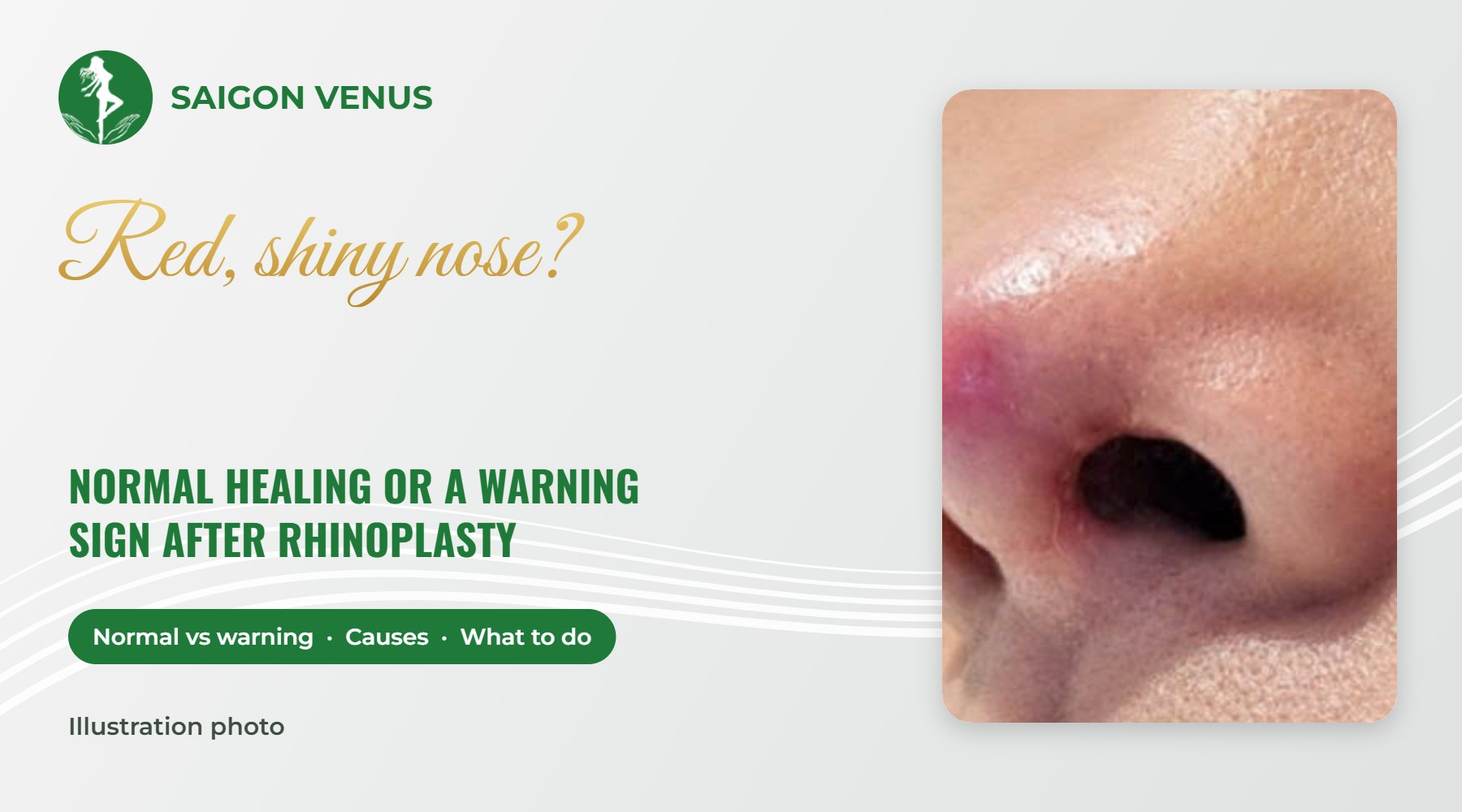
Your nose is a little red after rhinoplasty, and you keep checking the mirror. Is it healing, or is something wrong? Some redness, swelling and tightness are a normal part of recovery in the first days. But a tip that keeps getting redder, shinier or tighter may need a doctor’s check.
In 30 seconds
- Some redness, swelling and tightness is normal in the first days after rhinoplasty.
- Normal redness slowly fades. Warning redness stays or gets worse.
- Watch for thin, shiny skin, a tip pulling up, pain, heat or a visible implant.
- The fix starts with finding the cause, not just changing the shape.
This guide explains how to tell the difference, what can cause a red, shiny nose tip after rhinoplasty, and how Dr. Nguyen Tien Huy, MSc, approaches it at Saigon Venus.
When is a red nose after rhinoplasty normal?
In the first days after surgery, the tissue in your nose has just been operated on. It is common to see swelling, a tight feeling and some redness. The tip often swells more than the rest of the nose, the shape is not settled yet, and the skin can feel tighter than usual.
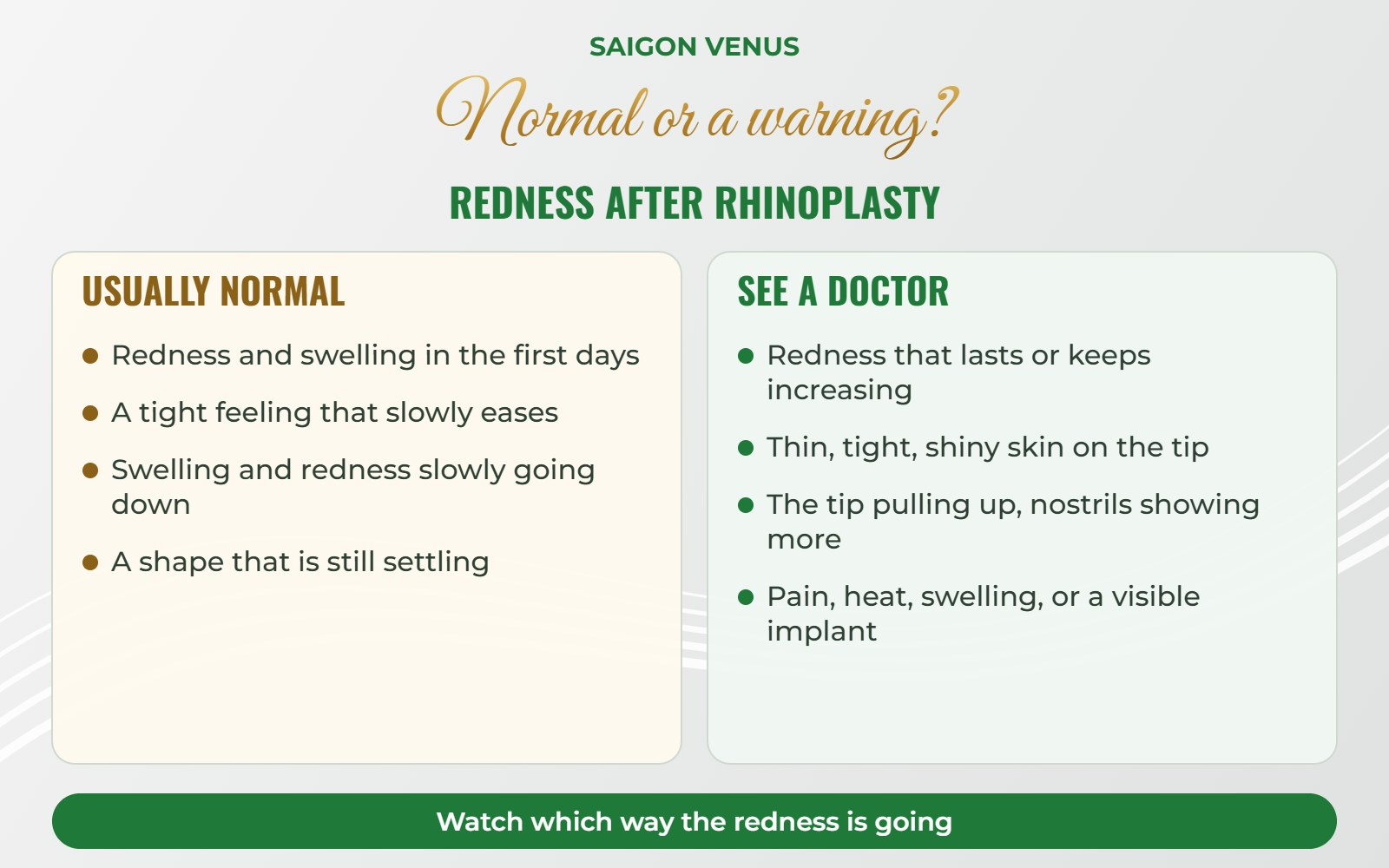
Normal post-surgery redness and swelling slowly get better. The tight feeling eases as the tissue heals.
Warning signs you should not ignore
Abnormal redness is different: it does not improve, and it becomes clearer over time. See a doctor if you notice:
- Redness that lasts or keeps increasing instead of fading
- Tight, shiny, thinner skin on the tip, sometimes showing the outline of the structure underneath
- A tip that pulls up or a nose that gets shorter, with more of the nostrils showing
- Redness with pain, heat or swelling that is getting worse, not better
- A visible implant or a clear change in shape
“It is not only whether your nose is red. It is which way the redness is going.”
If swelling and redness are going down, it is probably just healing. If redness stays, the skin gets thinner and shinier, or new signs appear, please get an in-person examination.
What causes a red, shiny nose tip?
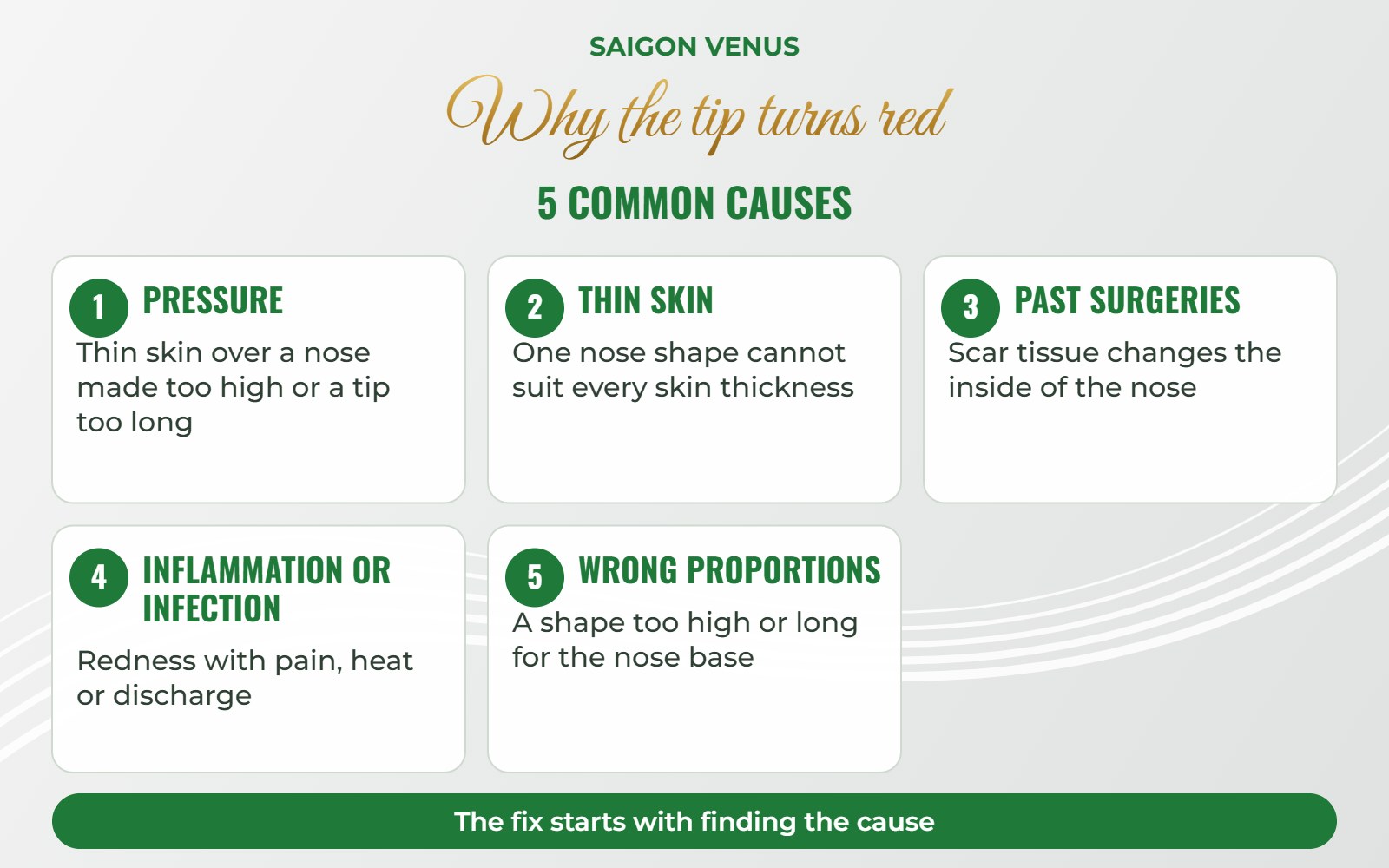
- Pressure from the structure on the soft tissue. If the skin is thin but the nose was made too high, or the tip too long, the soft tissue may be under too much pressure.
- Thin nose skin. Everyone has different skin thickness, so one nose shape cannot suit everyone.
- Several previous surgeries. Scar tissue and changes inside the nose need careful assessment. Adding more material without dealing with the tissue underneath can make things more complex.
- Inflammation, infection or problems during recovery. Redness with pain, heat, increasing swelling or unusual discharge should be checked early. Please do not buy medicine or treat it yourself at home.
- A nose shaped too high or too long for its base.
“A beautiful nose is not measured only by its height.”
Your surgeon needs to consider skin thickness, nose structure, length, tip, columella and the balance with your whole face.
How Dr. Huy approaches a red, shiny nose
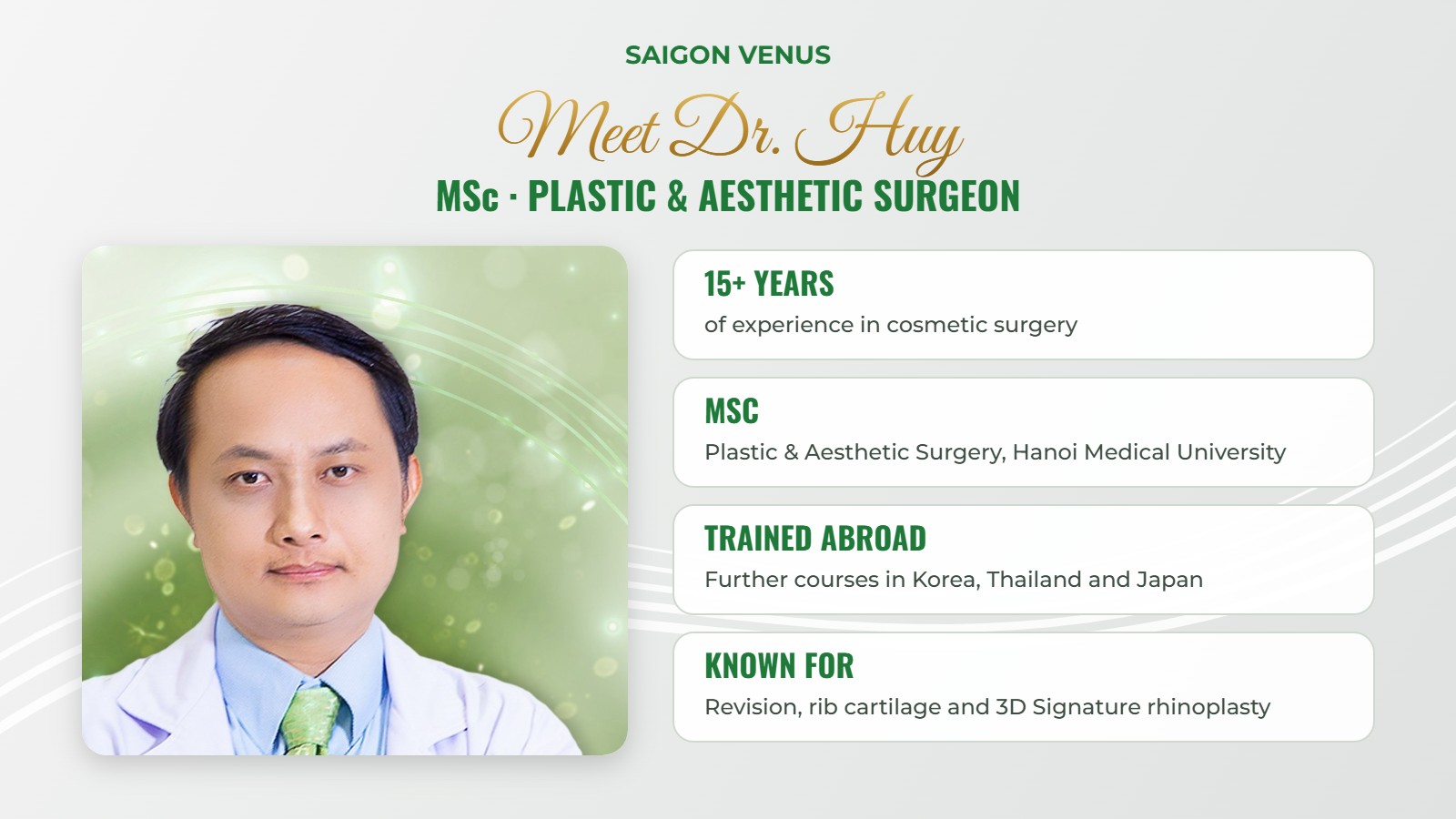
At Saigon Venus, Dr. Huy’s first priority is to find the cause before deciding how to correct it. Any inflammation, infection or tissue damage is treated first. Then, depending on the cause, the plan may involve reducing pressure on the skin, rebuilding the support structure and, for weak support or repeat revisions, rib cartilage. Not every case needs cartilage.
Results vary from person to person, and every surgery carries risks, which your doctor will explain at your consultation.
Watch: how Dr. Huy treats a nose after infection
In this video, Dr. Huy explains why a nose can become infected after surgery, and how he approaches it. It is the kind of honest conversation we have at every consultation.
Frequently asked questions
Is a red nose normal after rhinoplasty?
In the first days, some redness, swelling and tightness are common and usually fade as you heal.
When should I worry?
If redness lasts or increases, the skin becomes thin and shiny, the tip pulls up, or you have pain, heat, swelling or a visible implant.
Can I treat it at home?
Please do not buy medicine or treat it yourself. See a doctor, especially if redness comes with pain, heat or discharge.
What causes it?
Common causes are pressure on thin skin, a nose made too high or too long, scar tissue from several surgeries, and inflammation, infection or other problems after surgery.
Can I get an assessment from abroad?
Yes. Send front, side and base photos to our patient coordinator on WhatsApp +84 941 298 282.
Keep reading
With care, Mei
Patient coordinator at Saigon Venus. I speak English and Vietnamese. Send me your photos on WhatsApp +84 941 298 282 and I will reply to you personally.
Send your photos for an assessment
Send front, side and base photos of your nose to our patient coordinator on WhatsApp +84 941 298 282. We will reply personally. International patients: see how we look after you.
Saigon Venus · 702/2 Su Van Hanh Street, Hoa Hung Ward, Ho Chi Minh City, Vietnam · Hotline: 0846 30 22 33