


Hello, I’m Mei. I look after our international patients at Saigon Venus, and when you message us on WhatsApp, I’m the one who answers.
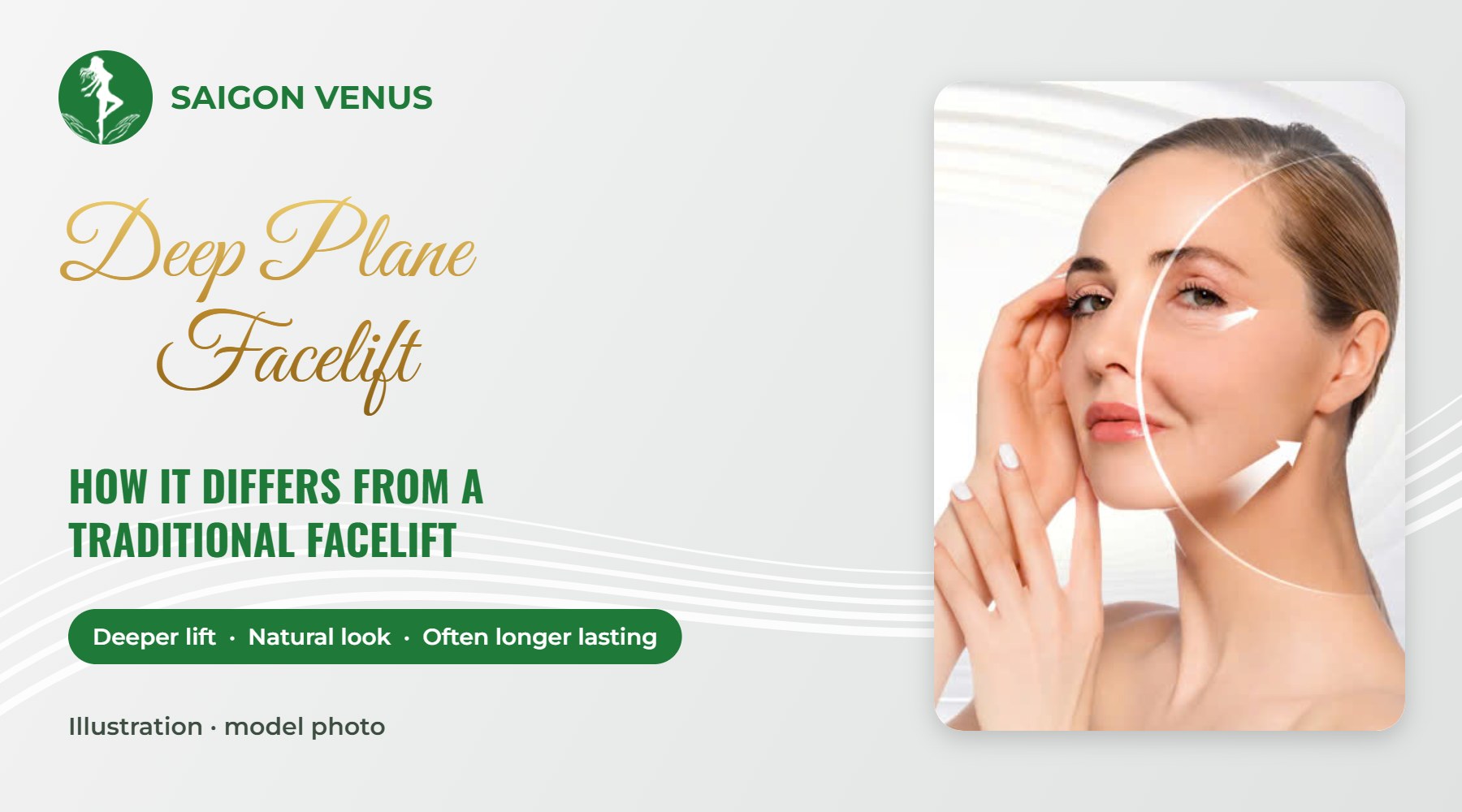
Before we talk about techniques, let me share three words. They come from one of our patients, a woman whose story we published with her case: “I lost myself.” She had tried thread lifts and non-invasive treatments. They helped, for a while.
Perhaps you know that feeling too. A softness along the jaw. A shadow beside the mouth that was not there a few years ago. So let me walk you through what a deep plane facelift is, how it differs from a traditional facelift, and what it looked like for her. Gently and honestly, the way I would explain it if you were sitting with me at our clinic in Ho Chi Minh City.
In 30 seconds
- A traditional facelift mainly tightens the skin.
- A deep plane facelift lifts the deeper support layer (SMAS and fat) after releasing the ligaments.
- The aim: a natural, not pulled look that usually lasts longer.
- It may suit sagging cheeks, deep smile lines, a blurred jawline, fullness under the chin and loose neck skin.
What a deep plane facelift really does
Here is the simplest way I can put it. As we age, it is not only the skin that loosens. Beneath it sits a deeper layer: the ligaments, the fat and the SMAS (superficial musculoaponeurotic system). This is the quiet architecture that holds your face up, and over time it slips.
A traditional facelift mainly lifts and trims the outer skin. A deep plane facelift goes to where the change actually happened. The surgeon releases the ligaments, then lifts the SMAS and fat back together, as one layer. The skin is then laid over it naturally, rather than pulled.
“Lift what fell. Don’t just pull what shows.”
Deep plane or traditional: the difference you will see
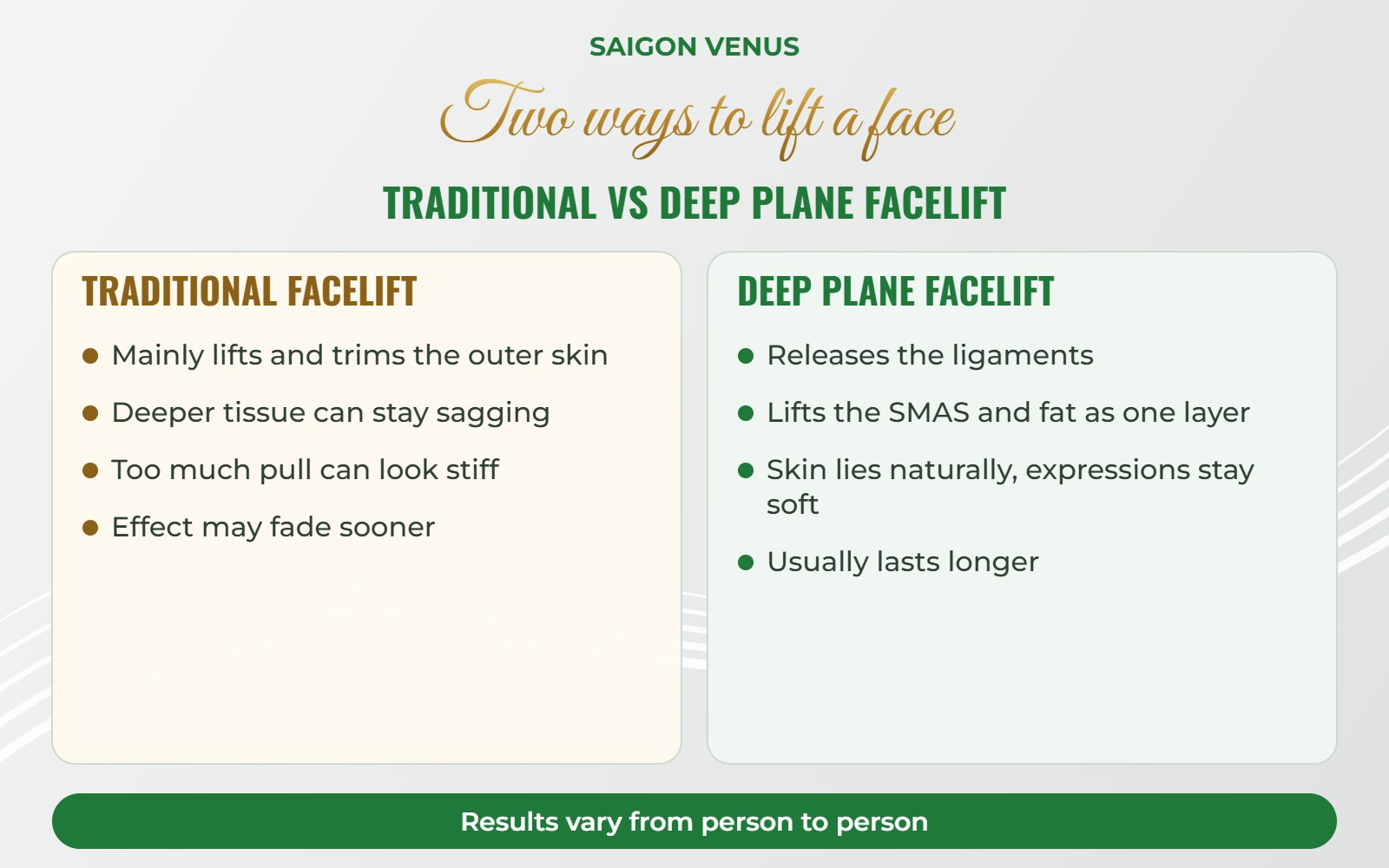
It treats the cause, not just the surface. When only the skin is tightened, the deeper tissue can stay sagging, and the change may fade sooner.
It keeps your face yours. Too much pull on the skin can look stiff. Because the lift happens underneath, expressions can stay soft.
It usually lasts longer. By addressing the structures behind sagging, it can improve the cheeks, the jawline and the neck, not only fine lines.
Recovery is becoming gentler. With modern technique and careful aftercare, an experienced surgeon preserves tissue well, which helps limit swelling and supports healing.
Her story, in pictures
Prefer to hear it from her? In this video, a client in her 40s shares her own deep plane facelift journey.
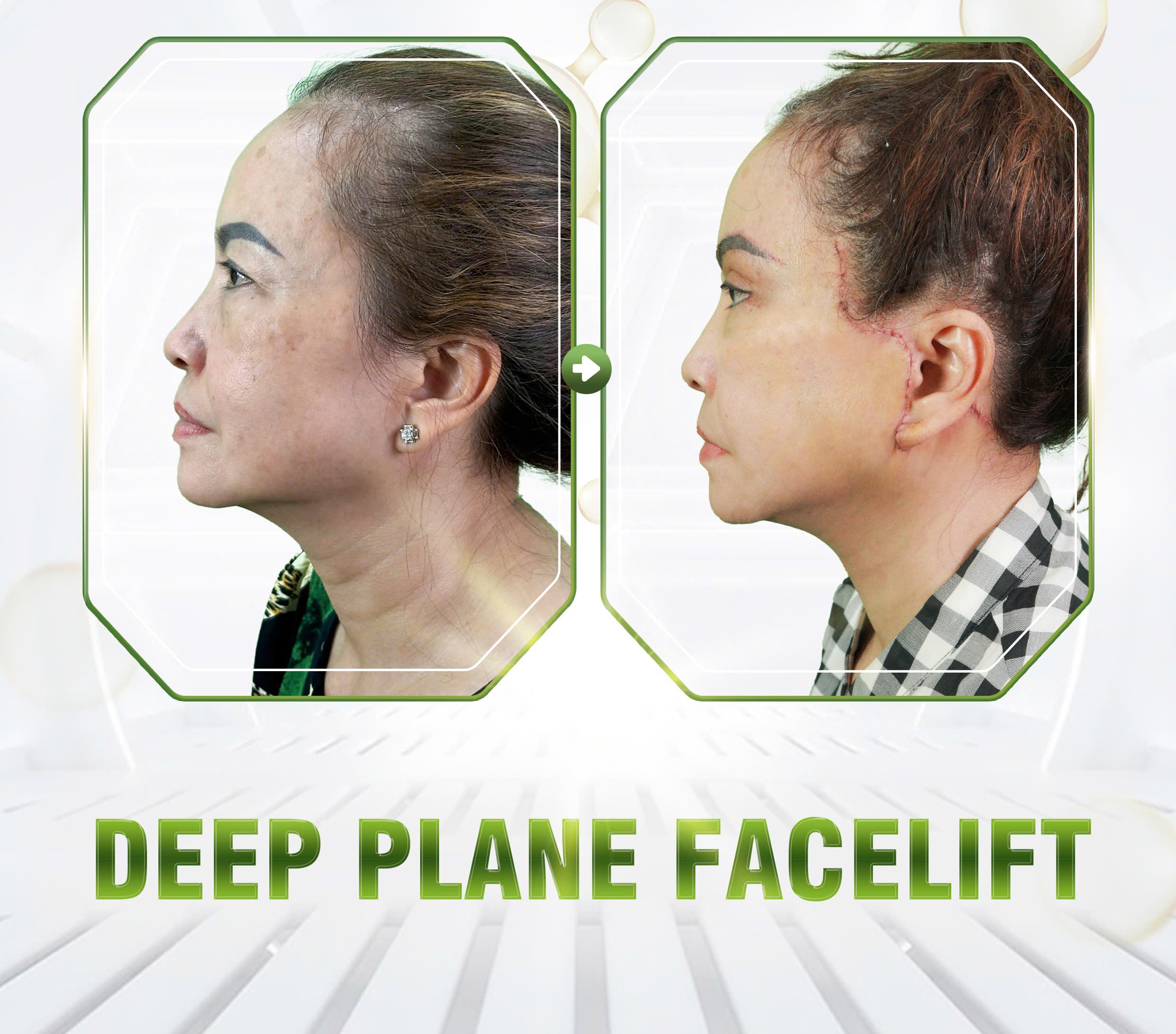
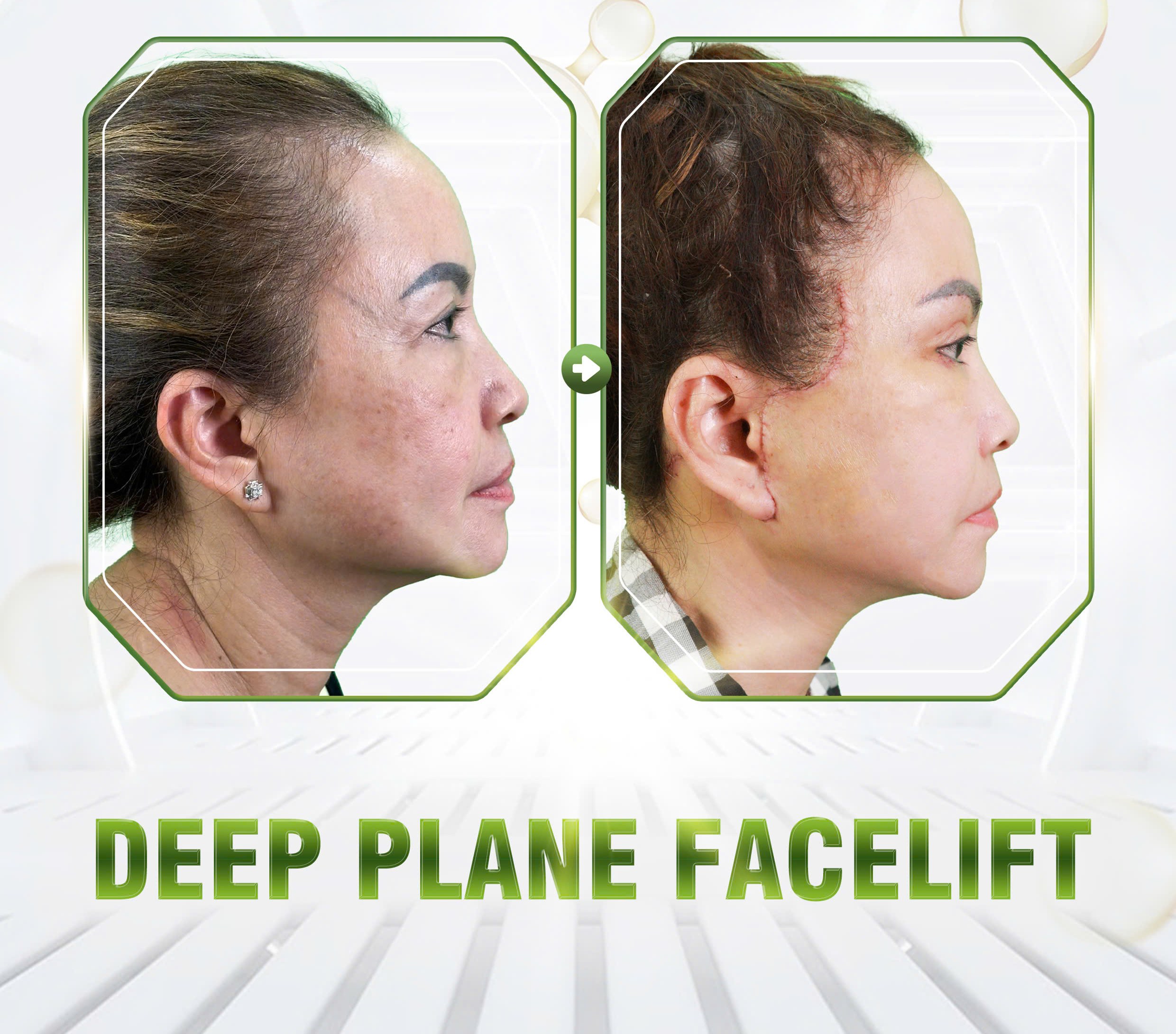
She came to us with deep smile lines, a sagging midface and loose skin along her jawline and neck. After a consultation and a 3D CT facial analysis, Dr. Nguyen Tien Huy, MSc, performed her deep plane facelift.
The photos below were taken in the early days after surgery, while her stitches were still in. So you are seeing her healing, not her final result. Read her full story.
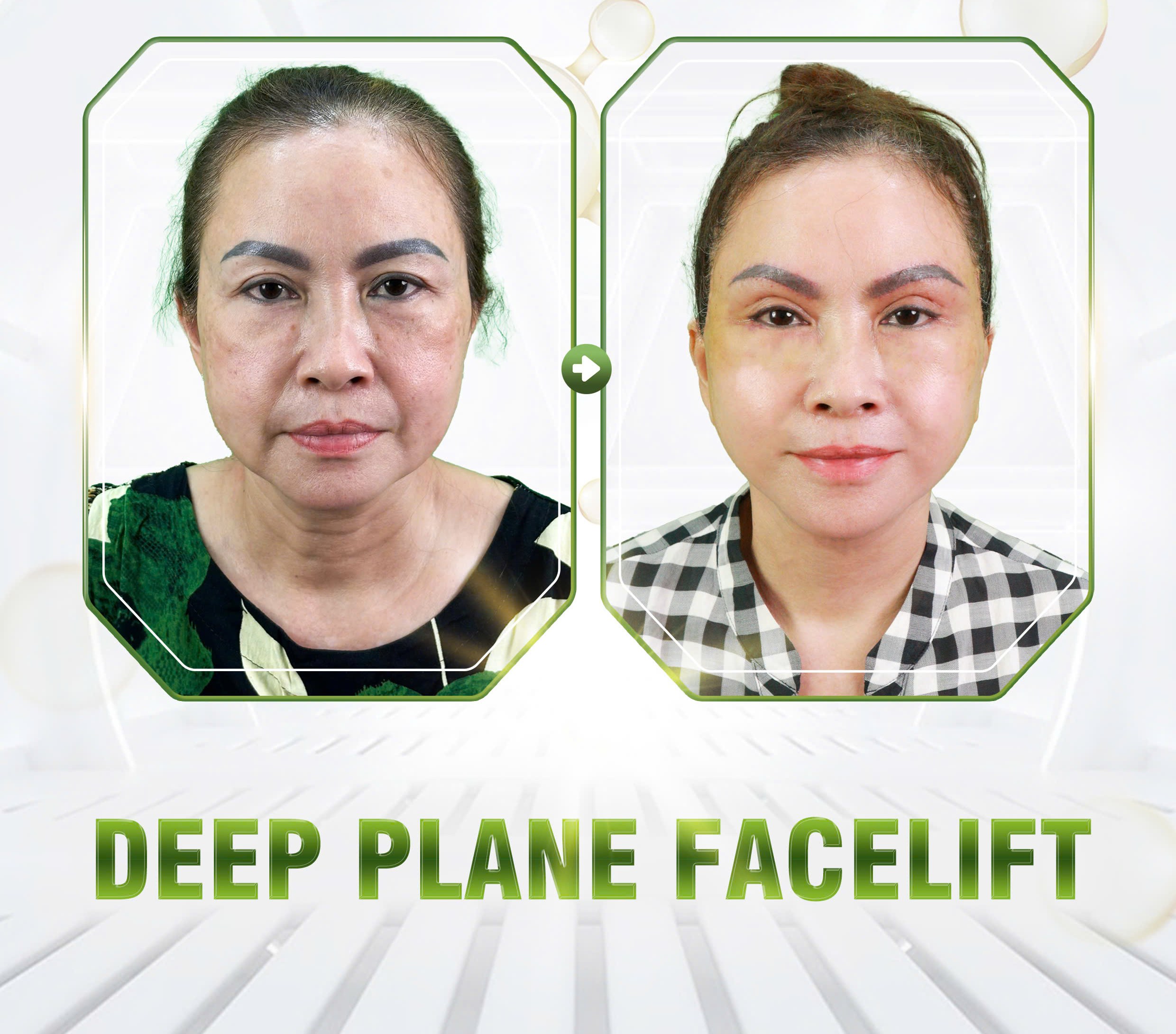
“A fresher look that still looks like you.”
Is it for you?
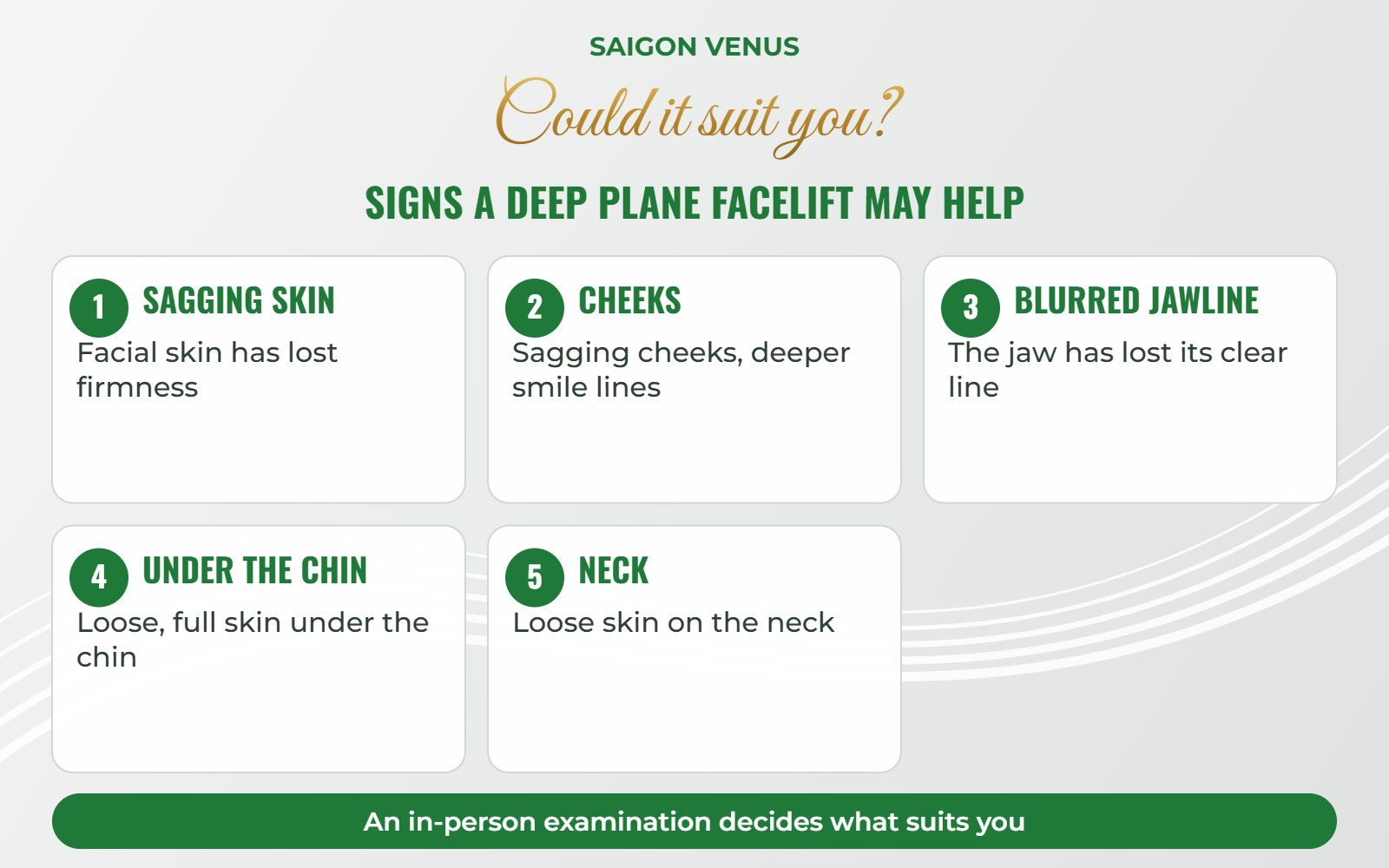
A deep plane facelift may suit you if you notice:
- Facial skin that has lost its firmness
- Sagging cheeks and deeper smile lines
- A jawline that has lost its clear line
- Loose, full skin under the chin
- Loose skin on the neck
The honest answer, though, always comes from an in-person examination. Some faces need this. Others do not, and a good surgeon will tell you so.
How we look after you
- Your doctor examines you in person before anything is planned.
- Aftercare chosen for you. When suitable, your doctor may recommend hyperbaric oxygen therapy, cold plasma or Esthelux light therapy.
- Someone beside you. A specialist cosmetic-surgery interpreter accompanies international patients during their visit.
- Still with you at home. After you fly home, I will check in on your recovery.
Results vary from person to person, and every surgery carries risks, which your doctor will explain at your consultation.
Frequently asked questions
What is the difference between a deep plane and a traditional facelift?
A traditional facelift mainly tightens the skin. A deep plane facelift releases the ligaments and lifts the deeper layer, the SMAS and fat, back into place, so the skin can rest naturally over it.
Will I look pulled or stiff?
The aim is the opposite. Because the lift happens beneath the skin, expressions can stay soft and natural.
How long does it last?
It usually lasts longer than older techniques because it treats the deeper structures, but results vary from person to person.
Who is it for?
People with sagging skin, sagging cheeks, deep smile lines, a blurred jawline, fullness under the chin or loose neck skin. An in-person examination decides what suits you.
How long should I stay in Vietnam?
It depends on your case. Message Mei on WhatsApp +84 941 298 282 and she will help you plan your dates.
Keep reading
With care, Mei
Patient coordinator at Saigon Venus. I speak English and Vietnamese. Send me your photos on WhatsApp +84 941 298 282 and I will reply to you personally.