


Had more than one nose surgery and still not happy, or facing a complication? Each operation can change the structure of your nose, form scar tissue and make the next rebuild more complex. That is why repeated revision needs careful assessment, not just a focus on the outside shape.
In 30 seconds
- Multiple nose surgeries do not always mean complications, but each one can make the next more complex.
- Risks include scar tissue, thin skin, too little cartilage, a distorted shape and breathing problems.
- Many fixes fail because only the outside was changed, not the structure inside.
- For a cosmetic revision, surgeons often wait about 6 to 12 months, but infection or exposure needs care sooner.
Is having multiple nose surgeries dangerous?
Having several surgeries does not mean you will definitely have complications. But compared with a first surgery, revision is usually more challenging, because the tissue inside has already been separated and operated on.
After each surgery, the body can form fibrous and scar tissue, so layers stick together and lose elasticity. Some patients also have thin skin on the tip, too little supporting cartilage, or a damaged septum.
“Each surgery can leave changes you cannot see.”
5 possible risks
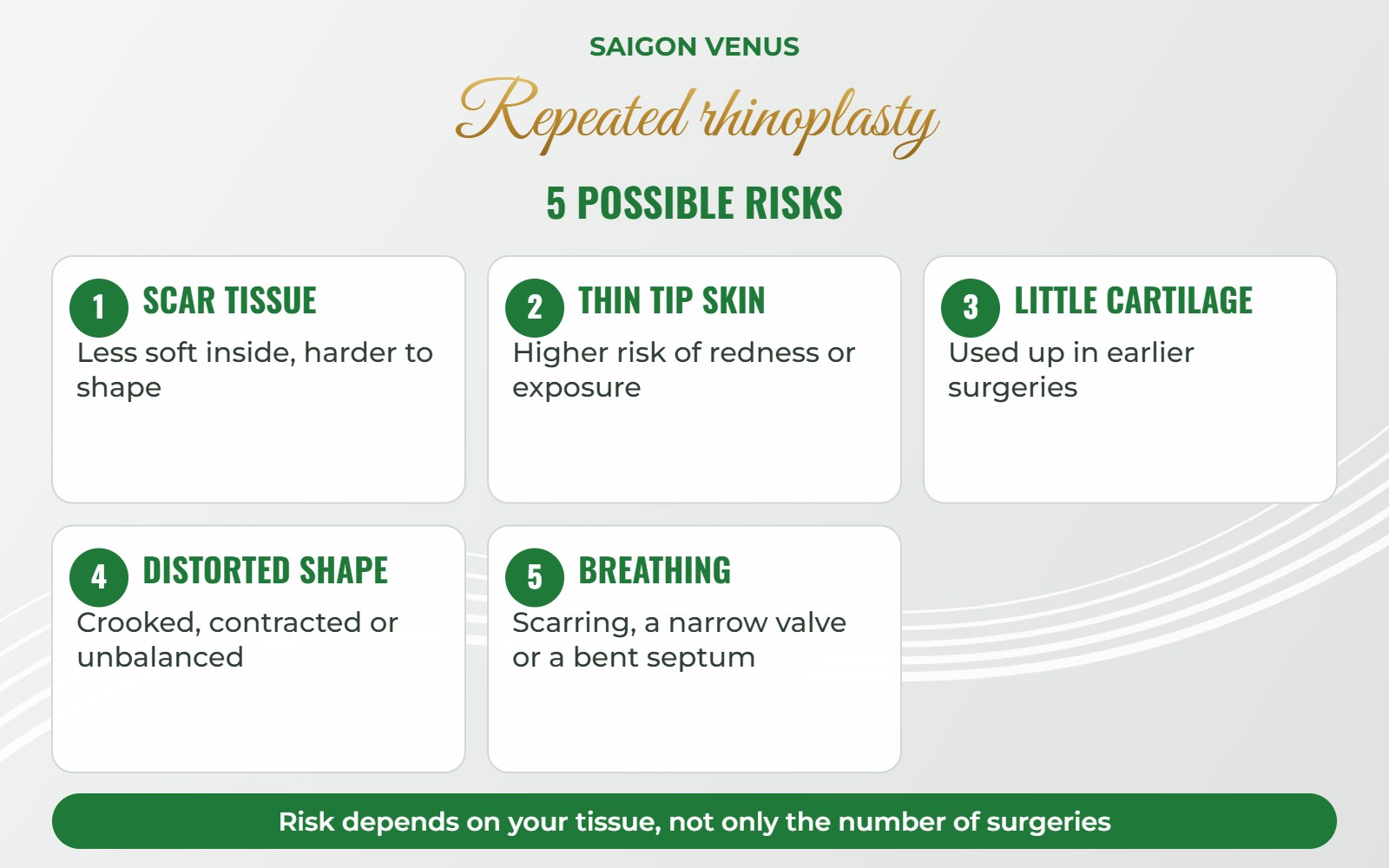
- Scar tissue: the inside becomes less soft and harder to shape.
- Thin tip skin: a higher risk of redness, shininess or an exposed implant.
- Too little cartilage: your own cartilage may have been used in earlier surgeries.
- A distorted structure: a crooked, contracted or unbalanced nose.
- Breathing problems: scarring, a narrow nasal valve or a bent septum can block the nose.
So the risk depends not only on the number of surgeries, but on your tissue, your nose structure and how each surgery was done.
Warning signs of a complication
Swelling, bruising or mild tightness can be normal while you recover. But if unusual signs last, get worse or come back after your nose had settled, get it checked:
- A crooked bridge or an off-center tip
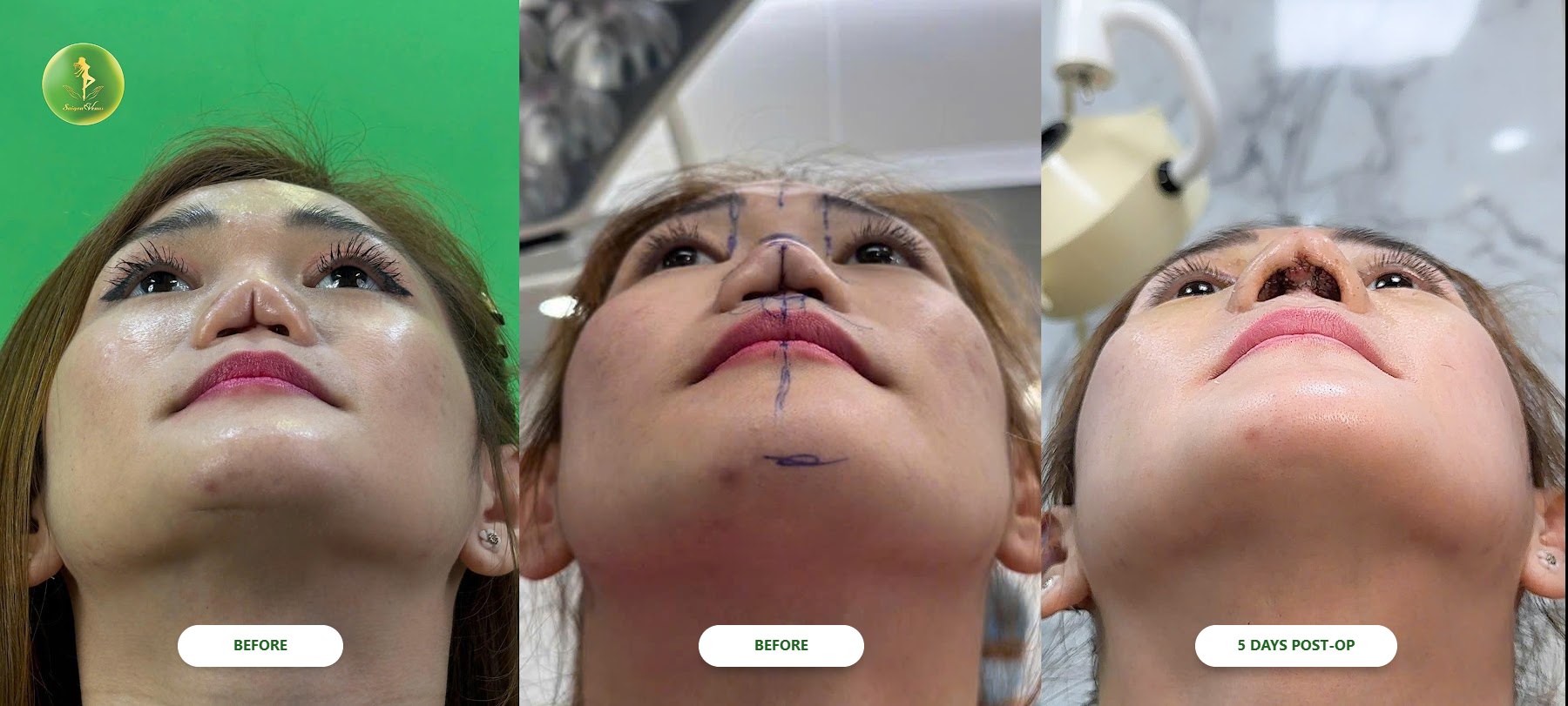
- A contracted, upturned tip with visible nostrils and tight skin
- Red, shiny or thin skin on the tip
- A visible or palpable implant, or an open wound (see the warning signs)
- Pain, heat, redness or discharge, which may be infection
- A blocked nose or difficulty breathing that lasts
Why some revisions still fail
A common reason is that only the outside was treated, while the problem inside the nose was not. For a crooked nose, moving the bridge without checking how stable the base is may let it shift again. For a contracted tip with thin skin, forcing the tip higher can add pressure and raise the risk of redness or exposure. Choosing a material that does not suit your current tissue can also make results unstable.
“Breathing comes before height.”
A safe path to revision
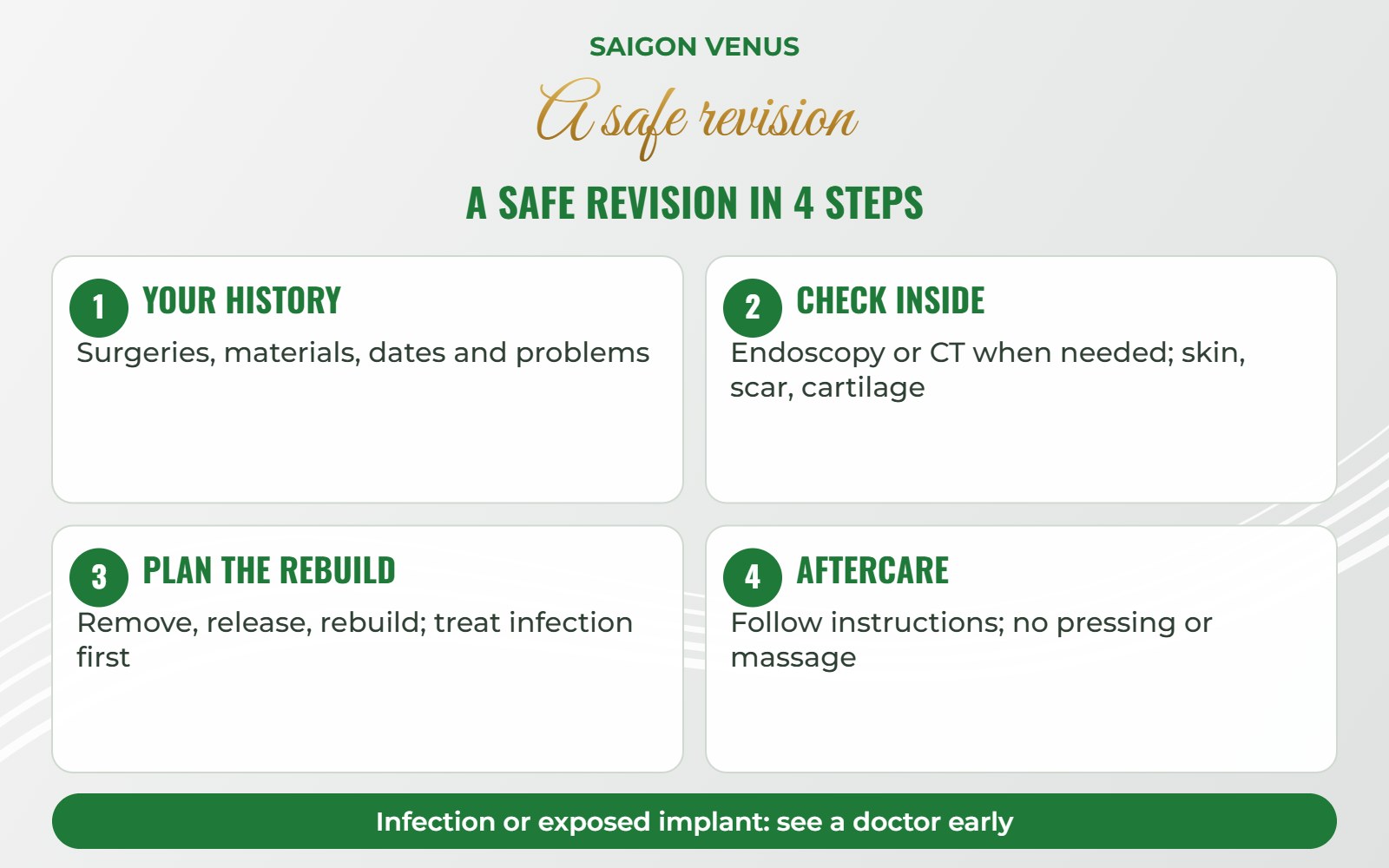
- Review your surgical history: how many surgeries, which materials, when, and what problems you had. Bring old records or photos if you can.
- Check the inside: depending on your case, nasal endoscopy or a CT scan to assess the septum and bone, plus skin thickness, scar tissue and remaining cartilage.
- Plan the rebuild: removing unsuitable material, releasing scar tissue, rebuilding the support structure and tip, or adding your own cartilage (ear, septal or rib). If there is infection or serious damage, the complication may be treated first.
- Aftercare: follow instructions, take medicine as prescribed and attend check-ups. Do not press, massage or remove dressings without your doctor’s approval.
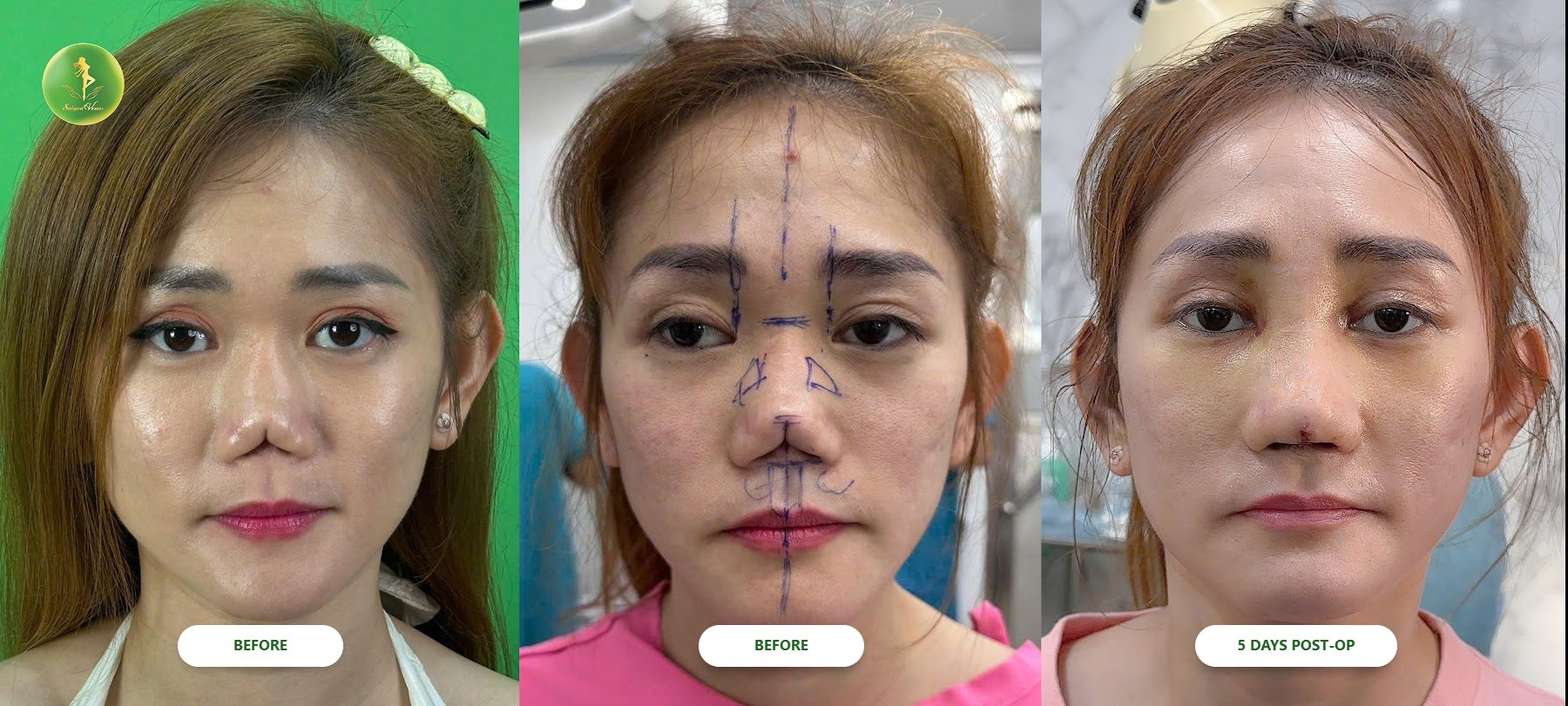
A real case: rebuilding after several failed surgeries
Angelina from Indonesia had several nose surgeries in Indonesia and Korea. Each one left her nose more contracted, until her columella had almost disappeared. Dr. Nguyen Tien Huy, MSc, rebuilt her nose with her own rib cartilage in an operation of about six hours. Read Angelina’s story.
When can you have the next surgery?
For a routine cosmetic revision, surgeons often wait for the tissue to recover and settle, about 6 to 12 months depending on your case. But with signs of infection, an exposed implant, skin damage or another serious problem, you should be examined early.
Results vary from person to person, and every surgery carries risks, which your doctor will explain at your consultation.
Watch: rescuing a nose after 7 surgeries
A real case, explained step by step by Dr. Huy.
Frequently asked questions
Is it dangerous to have a nose job more than once?
Not always, but each surgery can add scar tissue and change the structure, so revision is usually more complex.
What are the main risks?
Scar tissue, thin tip skin, too little cartilage, a distorted shape and breathing problems.
How long should I wait before another revision?
For a cosmetic revision, often about 6 to 12 months, but infection or an exposed implant needs care sooner.
What cartilage can be used?
Depending on what is left, ear, septal or rib cartilage may be considered.
Can I get an assessment from abroad?
Yes. Send photos and your surgical history to our coordinator on WhatsApp +84 941 298 282.
Keep reading
With care, Mei
Patient coordinator at Saigon Venus. I speak English and Vietnamese. Send me your photos on WhatsApp +84 941 298 282 and I will reply to you personally.
Send your photos for an assessment
Send photos of your nose and your surgical history to our patient coordinator on WhatsApp +84 941 298 282. We will reply personally. International patients: see how we look after you.
Saigon Venus · 702/2 Su Van Hanh Street, Hoa Hung Ward, Ho Chi Minh City, Vietnam · Hotline: 0846 30 22 33