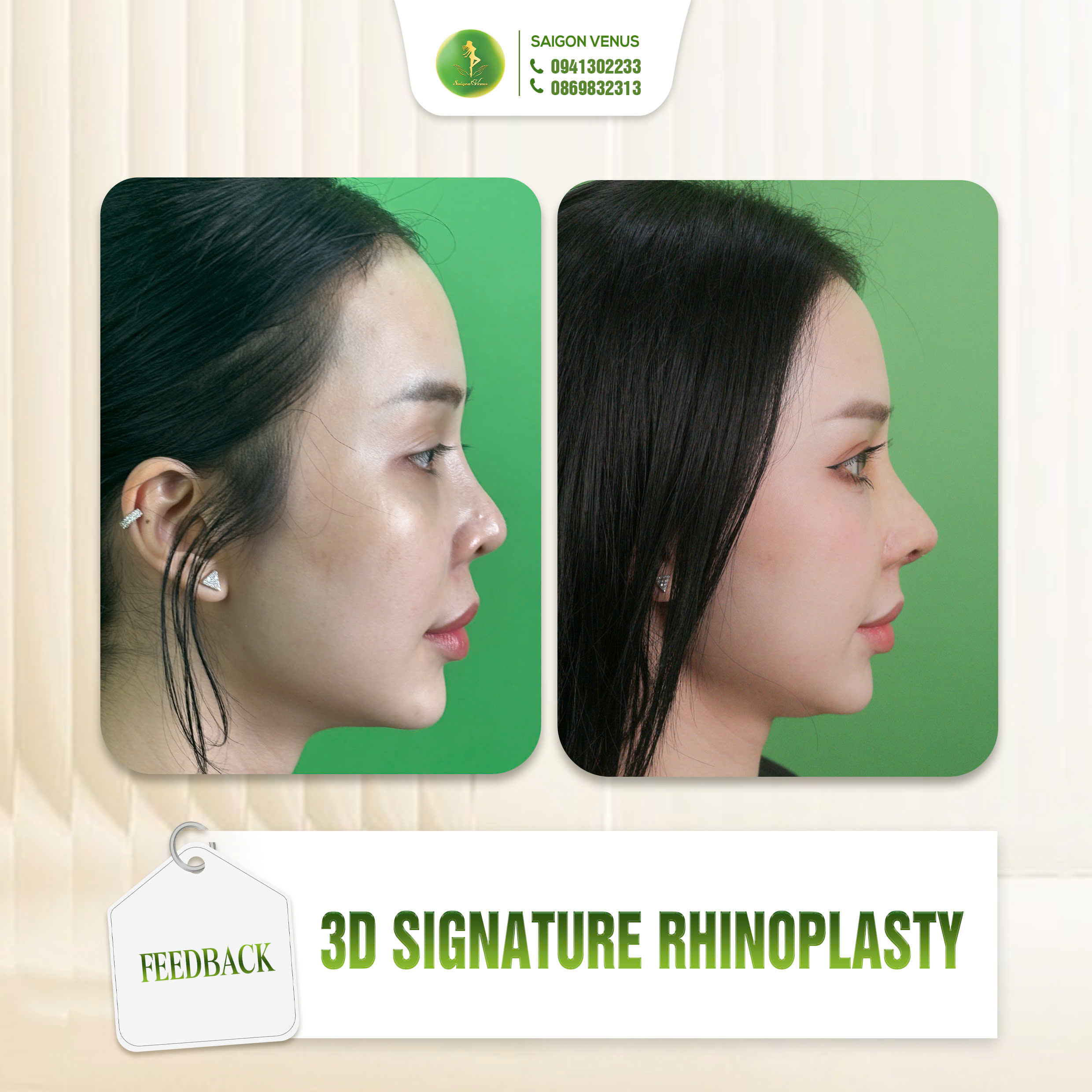
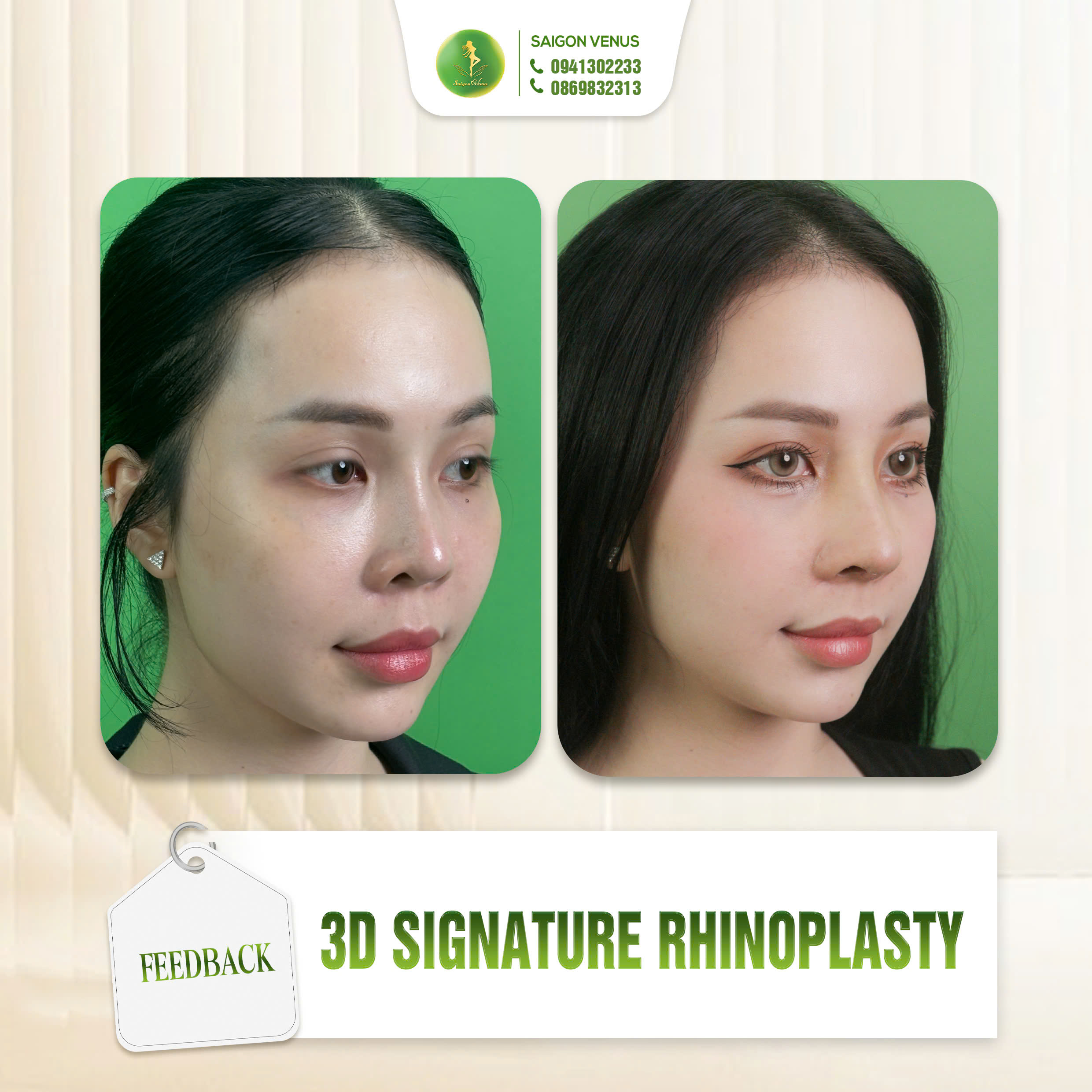
As a facial plastic surgeon, one of the most important aspects of rhinoplasty lies in understanding not just what a nose looks like—but how it integrates with the entire face. With the advent of 3D Signature technology, I now have the ability to analyze and design a personalized nasal structure based on precise anatomical data and the client’s facial balance. The following is a clinical breakdown of one of my recent cases.
Pre-operative Assessment
The patient initially presented with a short, upturned nose and visible asymmetry between the left and right alar base. From the lateral view, her nasal dorsum lacked projection, and the tip was blunt and slightly rotated upward, creating an imbalanced relationship between the nose and upper lip. The columella was retracted, and the internal nasal valve appeared narrow—contributing to complaints of mild breathing discomfort.
Using 3D CT imaging, we discovered previous surgical alterations and scarring that had caused structural instability. The septum was deviated, and the lower lateral cartilages had partially collapsed, contributing to both aesthetic irregularities and compromised nasal airflow.
Surgical Planning with 3D Signature
With 3D Signature, we were able to simulate multiple outcomes and precisely plan graft placement, projection angles, and tip refinement before making any incisions. The technology allowed both the patient and myself to agree on a vision that not only suited her facial proportions, but also respected functional integrity.
We decided on a full structural reconstruction using autologous rib cartilage. I shaped and reinforced the nasal bridge, reconstructed the septum for midline support, and designed a fascia-wrapped shield graft to define and lift the tip. The nostrils were carefully repositioned to achieve symmetry.
Post-operative Result
At the 1-month and 3-month post-operative reviews, the transformation was both visibly dramatic and functionally successful. From the front view, the nose now aligned harmoniously with her eyes and lips. The dorsal line flowed smoothly into a gently defined tip, and the nostrils were symmetrical and open. From the profile, we achieved an elegant S-curve with natural projection and an ideal nasolabial angle.
Most importantly, the patient reported significant improvement in nasal breathing due to the internal structural corrections. She also shared that the new nose made her feel more confident in social and professional settings—a reminder that aesthetic surgery can impact quality of life in meaningful ways.
Conclusion
This case exemplifies the value of 3D Signature rhinoplasty: combining high-precision planning, patient engagement, and advanced structural techniques to achieve natural, safe, and long-lasting results. As a surgeon, it’s incredibly rewarding to witness not just a change in the nose—but a transformation in how a person carries themselves.
SaiGon Venus Contact Information