


A well-defined, balanced lower face forms the structural anchor of overall facial harmony. In Asian aesthetic surgery, jawline reduction—commonly known as mandibular angle resection or V-line surgery—is one of the most transformative procedures available. For many individuals, an overly square, wide, or asymmetric jawline creates a heavy, masculine, or aged lower face, regardless of soft tissue volume or skin elasticity.
Through advanced maxillofacial surgical techniques, ThS-BS Nguyen Tien Huy at Saigon Venus Aesthetic Clinic transforms wide, prominent jaw structures into slender, soft, and naturally proportioned V-line profiles. Below is an in-depth surgical, anatomical, and aesthetic analysis of jawline contouring surgery.
1. Anatomical Basis of a Wide Jawline
Understanding why a jawline appears wide or square requires a clear distinction between hard tissue (bone) and soft tissue (masseter muscle and buccal fat):
- Mandibular Angle Prominence: The most common cause of a square jaw is an overly developed mandibular angle (the posterior corner of the lower jaw bone). A flare or downward projection of this bone broadens the lower third of the face from both frontal and profile views.
- Masseter Muscle Hypertrophy: Overactive chewing muscles (masseter muscles) often accompany prominent bone angles, adding volume to the sides of the face.
- Chin-to-Jaw Disconnect: A short, broad, or receded chin accentuates a wide jaw, preventing the lower face from tapering into an aesthetically pleasing oval or V-shape.
While temporary treatments like botulinum toxin can reduce muscle mass, permanent structural reshaping of a broad lower face requires surgical bone resection and contouring.
2. Advanced Surgical Techniques in Jawline Reduction
Facial bone contouring is a precise, micro-surgical procedure requiring high-level anatomical expertise, advanced 3D imaging, and meticulous execution.
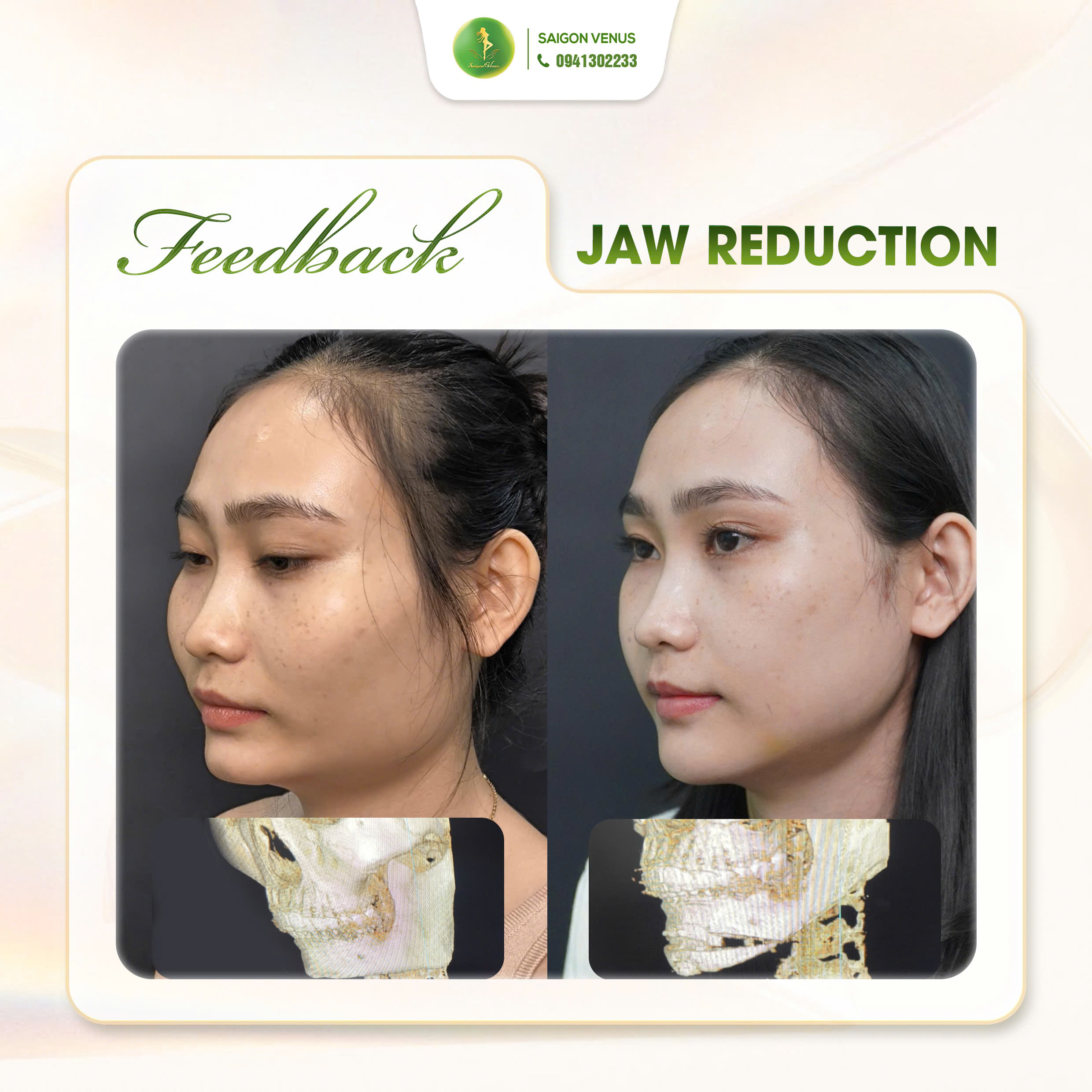
Pre-Surgical 3D CT Diagnostic Mapping
Before any incision is made, 3D Computed Tomography (CT) scanning is conducted to map the patient’s facial skeleton in three dimensions. This diagnostic step enables the surgeon to:
- Locate the exact pathway of the inferior alveolar nerve to ensure total nerve safety.
- Measure bone thickness and density to calculate the exact millimeter of bone to be resected.
- Simulate the post-surgical bone contour to match the patient’s individual facial proportions.
Long-Curve Mandibular Resection (Curved Osteotomy)
Older jaw reduction techniques often used a single straight cut, which frequently resulted in an unnatural, harsh “secondary angle” along the jawline. Dr. Nguyen Tien Huy utilizes the Long-Curve Osteotomy technique:
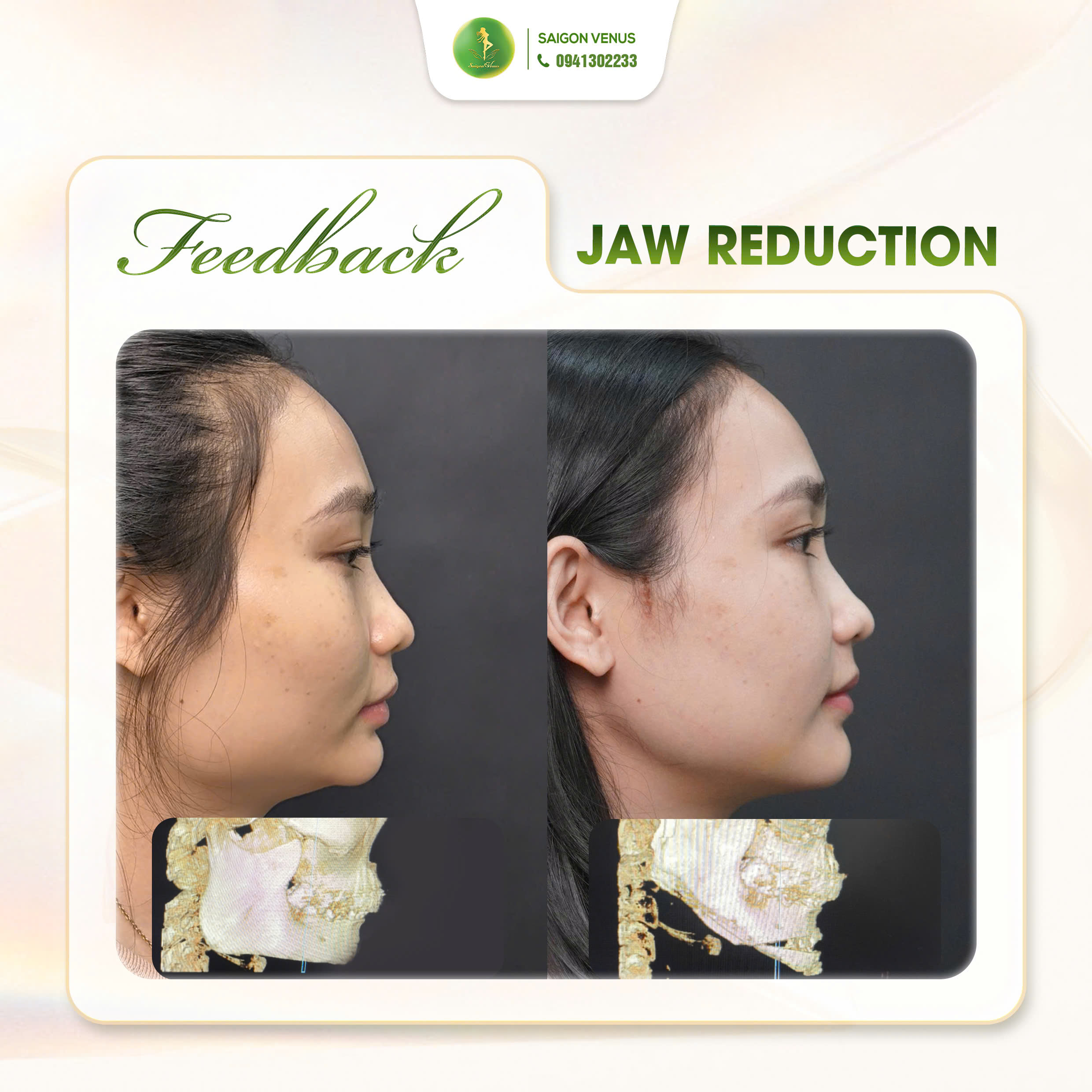
- Smooth Continuous Curve: The bone cut extends smoothly from below the ear (mandibular angle) along the jawline toward the chin.
- Natural Transition: This eliminates sharp corners, delivering a continuous, soft, and natural jawline contour from every angle.
Cortical Bone Resection (Outer Layer Shaving)
In patients with a wide jaw from the frontal view, simply removing the posterior angle is insufficient. Outer cortex shaving (cortical osteotomy) reduces the lateral thickness of the jawbone itself, narrowing the frontal width of the lower face significantly.
T-Osteotomy or Genioplasty (Chin Reshaping Integration)
To achieve a true V-line result, jawline reduction is frequently combined with chin reshaping:
- T-Osteotomy: A small section of bone in the center of the chin is removed, and the remaining segments are brought together and secured with biocompatible titanium mini-plates.
- Harmonious Taper: This lengthens or narrows the chin point, seamlessly connecting the new jawline curve into a balanced V-shape.
3. Key Before-and-After Structural Transformations
When evaluating a jawline reduction patient, the structural improvements extend beyond simple bone removal. Key visual and anatomical changes include:
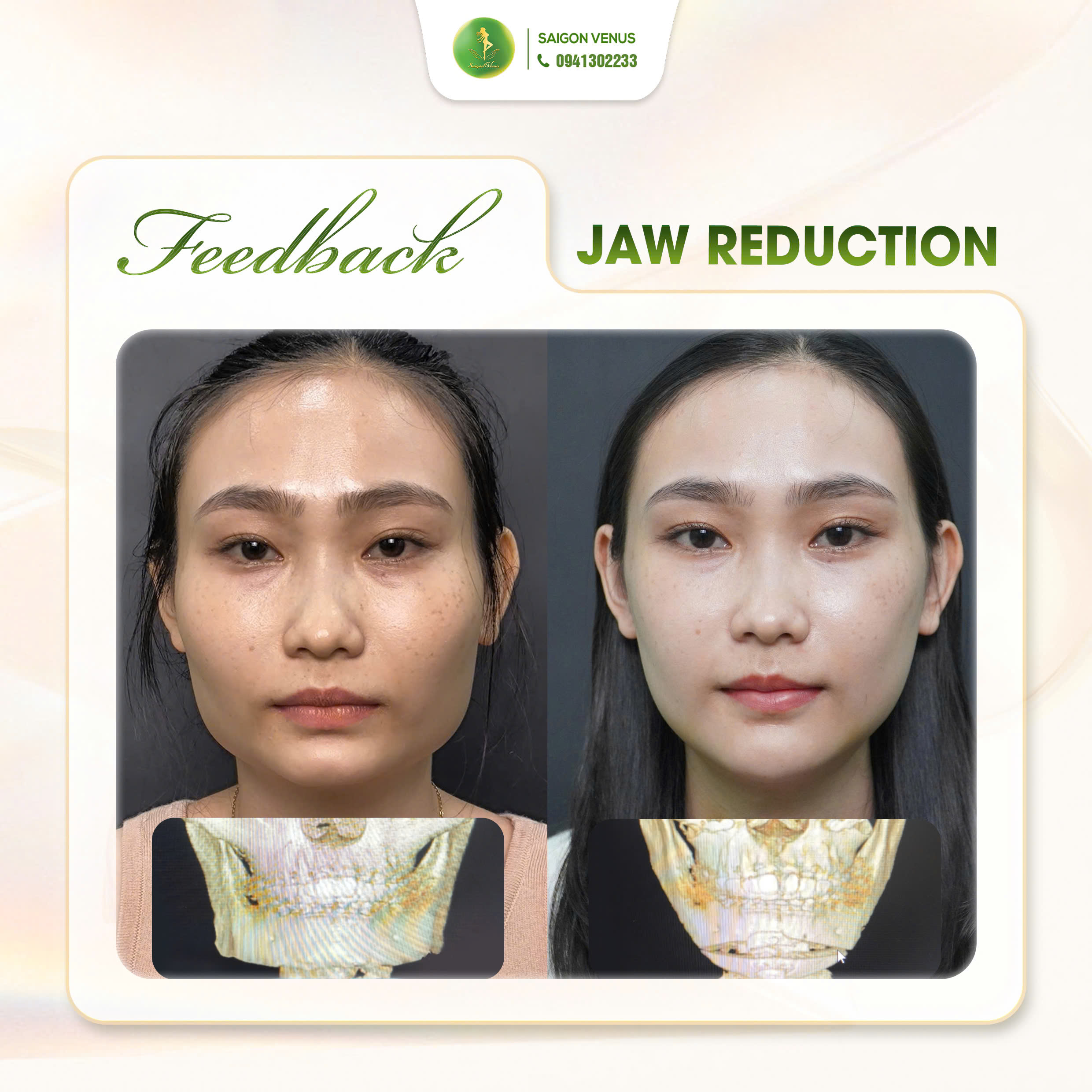
- Softening of the Posterior Mandibular Angle: The harsh 90-degree corner below the ear is reshaped into an elegant, sloping 120-to-130-degree aesthetic angle.
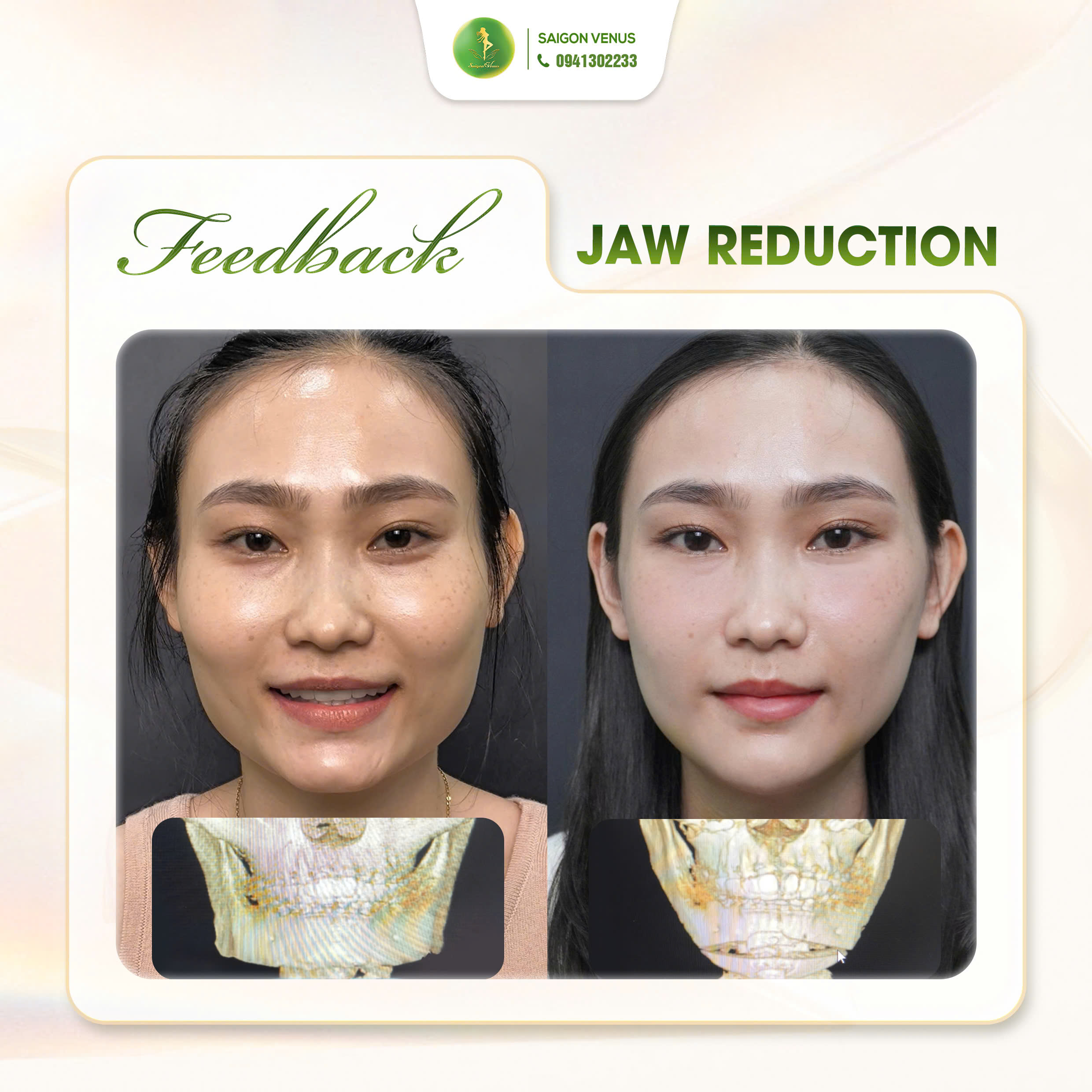
- Frontal Lower Face Narrowing: Lateral width reduction transforms a square or U-shaped lower face into a sleek, oval, or heart-shaped silhouette.
- Profile Line Continuity: The newly sculpted bone creates a clean, uninterrupted line from the earlobe down to the tip of the chin, eliminating jowl-like heaviness.
- Facial Proportion Rebalancing: By reducing the volume of the lower third of the face, the eyes, cheekbones, and lips appear more prominent and visually balanced.
4. Post-Operative Recovery and Bone Healing Timeline
Facial bone surgery requires structured post-operative care to ensure optimal soft tissue re-adaptation and bone healing:
- Days 1–3 (Initial Healing & Compression): Soft tissue swelling is managed using specialized facial compression garments and cold therapy.
- Week 1–2 (Soft Tissue Adaptation): Sutures inside the mouth heal rapidly. Patients transition from liquid foods to soft diets as swelling subsides.
- Month 1–3 (Bone Stabilization): The resected bone margins smooth out naturally as the periosteum and overlying muscle tissues readapt tightly to the new bone shape.
- Month 6 (Final Contouring): Residual micro-swelling completely resolves, revealing the final, sharp, and refined jawline contours.
5. Why Choose Saigon Venus & ThS-BS Nguyen Tien Huy for Facial Bone Contouring?
Facial bone surgery demands an absolute mastery of maxillofacial anatomy, high-precision surgical instruments, and an artistic vision for facial balance.
- Surgical Precision: ThS-BS Nguyen Tien Huy combines advanced 3D CT mapping with long-curve osteotomy techniques to ensure maximal safety and symmetrical results.
- Personalized Facial Design: Resection plans are tailored to match each patient’s individual features rather than applying a standardized template.
- Comprehensive Care: From pre-operative 3D modeling to post-surgical recovery protocols, patients receive rigorous, hospital-grade care at every stage.