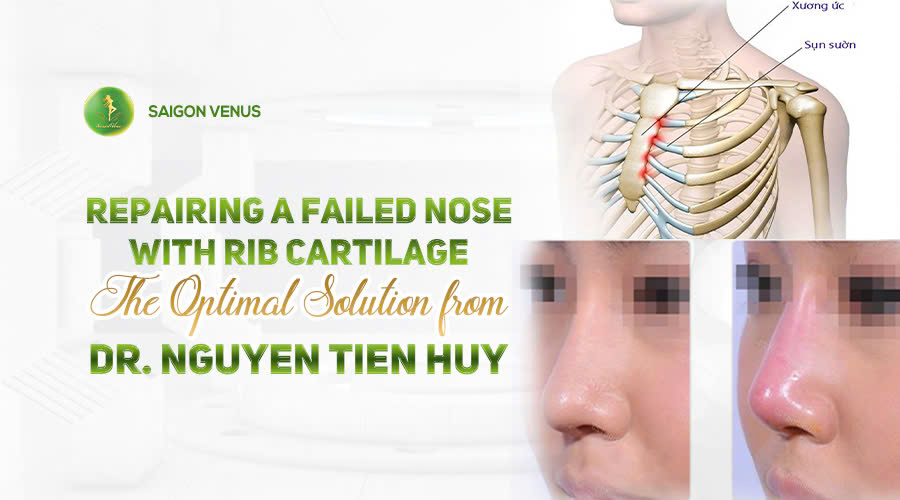
Revision rhinoplasty is considered one of the most complex procedures in aesthetic surgery. Unlike primary rhinoplasty, failed nose cases often involve severe complications such as chronic infection, implant exposure, skin thinning, nasal tip contracture, loss of structural support, or even impaired breathing function. In these situations, autologous rib cartilage rhinoplasty is widely recognized as the most reliable and long-term solution.
Why failed noses require advanced reconstruction techniques
After multiple surgeries, nasal tissues are often scarred, weakened, and poorly vascularized. The nasal skin becomes thin and fragile, while the supporting framework may collapse or be partially destroyed. Reusing synthetic implants in such cases significantly increases the risk of reinfection, extrusion, and further deformation. Therefore, experienced surgeons prioritize rib cartilage, a biocompatible and durable material, to rebuild the nose safely.
Rib cartilage – the foundation of complex nasal reconstruction
Autologous rib cartilage offers superior strength, stability, and long-term safety. In revision cases, it is not only used to recreate the nasal dorsum but also to reconstruct the columella, reinforce the nasal tip, and restore proper airflow. For patients suffering from severe infection, tissue fibrosis, or complete loss of nasal support, rib cartilage provides a solid framework that allows both functional and aesthetic recovery.
Advanced revision rhinoplasty at SaiGon Venus
Under the expertise of Master Surgeon Nguyen Tien Huy, each failed nose case undergoes a comprehensive evaluation using CT scans and 3D facial analysis. This allows precise assessment of bone structure, cartilage damage, and soft tissue condition. The first priority is always to eliminate infection and remove unsafe materials before performing full structural reconstruction with rib cartilage.
Rather than pursuing excessive height, the goal of revision rhinoplasty is safety, balance, and long-term stability. The new nasal shape is carefully designed to suit the patient’s facial proportions while minimizing pressure on the skin and reducing the risk of recurrent complications.
Who should consider rib cartilage revision rhinoplasty?
-
Chronic nasal infection after rhinoplasty
-
Implant exposure or thinning nasal skin
-
Severe tip contracture or deformity
-
Multiple failed rhinoplasty procedures
-
Breathing difficulties or nasal obstruction
Conclusion
Revision rhinoplasty is not merely a cosmetic correction—it is a true reconstructive surgery. Choosing the right surgeon and the appropriate technique, especially rib cartilage rhinoplasty, is crucial to achieving a safe, natural, and long-lasting result. With proper expertise, even the most complicated failed noses can be successfully restored both aesthetically and functionally.